

🏯 Mahabodhi Temple Complex at Bodh Gaya: A Sacred Buddhist Pilgrimage Site 🙏
Hello there, Temple Lovers! Today we’re exploring one of Buddhism’s most sacred sites – the magnificent Mahabodhi Temple Complex. This UNESCO World Heritage site marks the spot where Buddha attained enlightenment under the famous Bodhi Tree, making it one of the most important pilgrimage destinations for Buddhists worldwide.
As we journey through this spiritual haven, we’ll discover its rich history spanning over 2,000 years, explore its magnificent architecture, and understand why millions of devotees from across the globe visit this sacred place annually. The Mahabodhi Temple stands as a testament to human faith and spiritual awakening, offering profound insights into Buddhist philosophy and traditions.
🕍 History and Significance of Mahabodhi Temple Complex 🕍
The Mahabodhi Temple Complex holds immense historical and spiritual significance in Buddhism. Around 2,500 years ago, a young prince named Siddhartha Gautama sat beneath a fig tree (now known as the Bodhi Tree) in this exact location, determined to meditate until he found the answers to human suffering. After 49 days of deep meditation, he attained enlightenment and became Buddha – “the awakened one.”
Emperor Ashoka, a devoted Buddhist, visited this site in the 3rd century BCE and constructed the first temple to commemorate Buddha’s enlightenment. However, the temple we see today dates back to the 5th-6th centuries CE, though it has undergone several renovations and restorations throughout history, particularly after periods of decline and damage.
The revival of interest in this sacred site began in the 19th century when the Burmese and British governments initiated restoration projects. In 2002, UNESCO recognized the cultural and spiritual importance of the Mahabodhi Temple Complex by designating it as a World Heritage Site, ensuring its protection and preservation for future generations.
The Legend of Buddha’s Enlightenment
The story of Buddha’s enlightenment at Bodh Gaya forms the cornerstone of Buddhist faith. After abandoning his life of luxury as a prince, Siddhartha Gautama spent years searching for the truth about human existence and suffering. His journey culminated here, under the Bodhi Tree, where he faced and overcame numerous temptations and challenges.

During his meditation, Mara (the demon of desire) tried to distract him with visions of beautiful women and threats of violence. According to Buddhist texts, the earth itself bore witness to Siddhartha’s right to seek enlightenment. Upon achieving enlightenment, he spent seven more weeks in the vicinity, contemplating his experience and deciding to share his insights with others.
Architectural Marvel Through the Ages
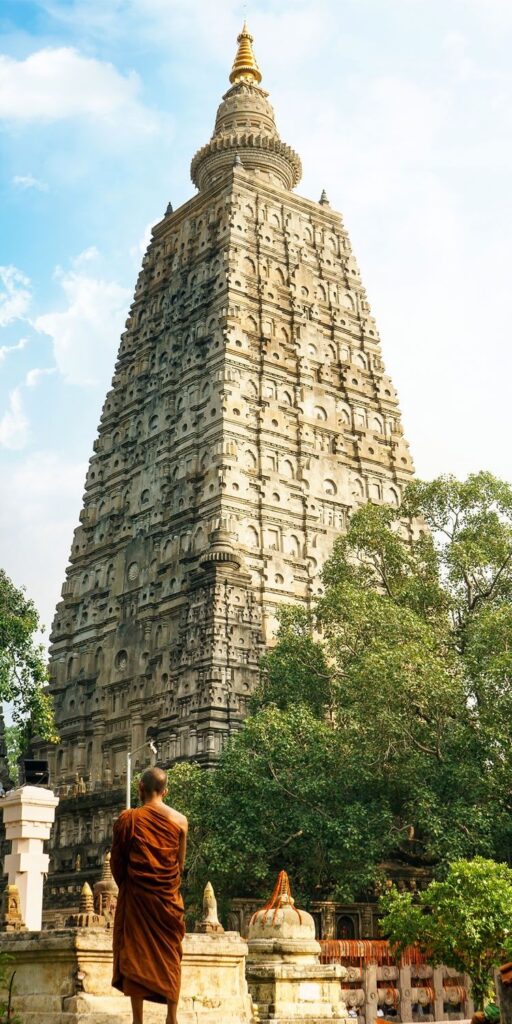
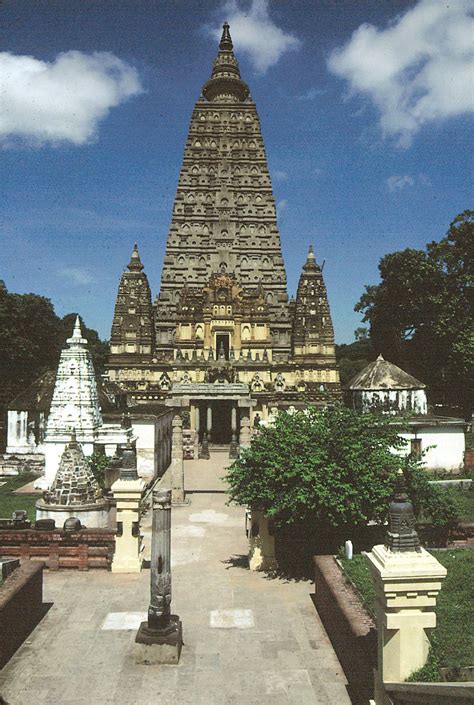
The architecture of the Mahabodhi Temple reflects a unique blend of various styles that evolved over centuries. The main temple stands 55 meters tall, featuring a pyramidal spire with distinctive ornamental elements. Its design has influenced Buddhist architecture across Asia, particularly in countries like Myanmar, Thailand, and Indonesia.

The temple’s exterior is adorned with intricate carvings depicting scenes from Buddha’s life and various Buddhist motifs. The interior houses a large gilded statue of Buddha in the earth-touching gesture (bhumisparsha mudra), representing the moment of his enlightenment. The statue, believed to be 1,700 years old, sits facing east, the direction Buddha was facing when he attained enlightenment.
| Feature | Description | Historical Period |
|---|---|---|
| Main Temple | 55m tall pyramidal structure | 5th-6th century CE |
| Bodhi Tree | Descendant of original fig tree | Current tree planted 1881 |
| Buddha Statue | Gilded figure in bhumisparsha mudra | 3rd-4th century CE |
| Meditation Gardens | Seven sacred spots | Various periods |
| Vajrasana | Diamond throne where Buddha sat | Original from Ashoka period |
| Railings | Stone railings with carvings | Sunga period (2nd century BCE) |
🧘 Spiritual Practices and Pilgrimage at Mahabodhi 🧘

The Mahabodhi Temple Complex remains a living center of Buddhist spirituality, where practitioners from various Buddhist traditions gather to meditate, offer prayers, and perform rituals. Many pilgrims follow in Buddha’s footsteps by meditating under the Bodhi Tree, seeking spiritual insights and personal transformation.
Circumambulation (pradakshina) of the main temple is a common practice among devotees, who walk clockwise around the structure while reciting mantras or engaging in silent contemplation. The pathway for this ritual is paved with smooth stones and lined with prayer wheels, adding to the meditative experience of the journey.
Meditation Practices at Bodh Gaya

Meditation forms the heart of spiritual practice at the Mahabodhi Temple Complex. Monks and laypeople alike can be seen sitting in quiet contemplation throughout the complex, particularly around the Bodhi Tree and in designated meditation areas. Many spiritual seekers stay for extended periods, sometimes weeks or months, to deepen their practice in this sacred environment.
Various Buddhist traditions offer guided meditation sessions and retreats in the many monasteries surrounding the temple complex. These range from Vipassana (insight meditation) to Zen practices, allowing visitors to experience different approaches to Buddhist meditation. The serene atmosphere, with the soft sounds of chanting and gentle breeze rustling through the Bodhi Tree’s leaves, creates ideal conditions for inner exploration.
Annual Festivals and Celebrations

The Mahabodhi Temple Complex comes alive during important Buddhist festivals, particularly Buddha Purnima (Vesak), which commemorates Buddha’s birth, enlightenment, and death. During this festival, typically held in May, thousands of devotees gather for special prayers, meditation sessions, and cultural performances.
The Kagyu Monlam Prayer Festival, held in December-January, attracts practitioners of Tibetan Buddhism who engage in continuous prayer ceremonies for world peace. The complex is beautifully decorated with butter lamps, flowers, and colorful prayer flags during these celebrations, creating a visually stunning and spiritually uplifting atmosphere.
| Festival | Time of Year | Main Activities | Significance |
|---|---|---|---|
| Buddha Purnima (Vesak) | May (full moon) | Prayers, meditation, lantern lighting | Celebrates Buddha’s birth, enlightenment & parinirvana |
| Kagyu Monlam | December-January | Continuous prayers, butter lamp offerings | World peace and harmony |
| Nyingma Monlam | January-February | Tibetan rituals, prayer recitations | Purification and merit accumulation |
| Losar | February (Tibetan New Year) | Processions, mask dances | Renewal and auspicious beginnings |
| Kathina Ceremony | October-November | Robe offering to monks | End of rain retreat (vassa) |
🌏 Cultural Impact and Global Buddhist Community 🌏

The Mahabodhi Temple Complex serves as a unifying center for the global Buddhist community, bringing together practitioners from diverse cultural backgrounds and Buddhist traditions. Around the main temple, various countries have established monasteries and temples reflecting their unique architectural styles and spiritual practices.
This international Buddhist presence has transformed Bodh Gaya from a remote Indian village into a vibrant multicultural center. Visitors can experience Japanese Zen gardens, Thai-style stupas, Tibetan prayer halls, and Sri Lankan meditation centers within walking distance of each other, creating a living museum of Buddhist culture and architecture.
International Monasteries and Temples
The area surrounding the Mahabodhi Temple Complex has become home to dozens of international Buddhist monasteries, each representing different countries and traditions. The Thai temple features characteristic sloped roofs and golden ornaments, while the Japanese temple showcases minimalist Zen aesthetics with rock gardens and meditation halls.
These international establishments not only serve their respective national communities but also offer cultural exchange opportunities for visitors. Many provide accommodation, meditation courses, and cultural programs that help spread Buddhist teachings and practices worldwide. The presence of these diverse Buddhist communities has created a unique spiritual ecosystem where various interpretations of Buddha’s teachings coexist harmoniously.
Educational and Charitable Initiatives
Beyond spiritual practices, the international Buddhist community at Bodh Gaya has initiated numerous educational and charitable projects to serve the local population. Monasteries run schools, medical clinics, and vocational training centers, embodying the Buddhist principle of compassionate action.
The Root Institute for Wisdom Culture offers courses on Buddhist philosophy and meditation while running community development projects. Similarly, the Maitreya Project focuses on healthcare and education for underprivileged communities. These initiatives demonstrate how spiritual practice translates into social engagement, creating a positive impact on the region’s development.
| Country | Monastery/Temple | Architectural Style | Special Features |
|---|---|---|---|
| Thailand | Thai Monastery | Traditional Thai | Golden Buddha, sloped roof design |
| Japan | Japanese Temple | Zen minimalist | Rock gardens, meditation halls |
| Tibet/China | Tergar Monastery | Tibetan Buddhist | Colorful thangka paintings, prayer wheels |
| Sri Lanka | Mahabodhi Society Temple | Sinhalese Buddhist | Ancient relics, Pali scripture library |
| Vietnam | Vietnamese Temple | East Asian | Lotus pond, incense pagoda |
| Bhutan | Royal Bhutan Monastery | Himalayan | Elaborate woodcarvings, masked dance arena |
How to Reach Mahabodhi Temple Complex
For those planning to visit this sacred site, the Mahabodhi Temple Complex is located in Bodh Gaya, Bihar, India. The nearest airport is Gaya International Airport, approximately 7 km away, which connects to major Indian cities like Delhi and Kolkata. Alternatively, visitors can reach Gaya Junction Railway Station (16 km from Bodh Gaya) which is well-connected to various parts of India.
You can find the temple complex on Google Maps here: https://www.google.com/maps/search/?api=1&query=Mahabodhi+Temple+Complex+Bodh+Gaya
Visitor Information and Practical Tips
The Mahabodhi Temple Complex welcomes visitors year-round, though the most pleasant weather occurs from October to March. The temple opens at 5:00 AM and closes at 9:00 PM daily, with special extended hours during major Buddhist festivals. Visitors are required to remove their shoes before entering the temple premises and maintain respectful behavior throughout their visit.
Photography is permitted in most areas, though it’s restricted inside the main temple sanctuary. Modest dress is expected, with shoulders and knees covered for both men and women. While entry to the complex is free, donations for temple maintenance are welcomed and appreciated.
Related Keywords
Buddhist pilgrimage sites, Buddha enlightenment, Bodhi Tree significance, UNESCO World Heritage Buddhist sites, Ancient Buddhist temples India
The Mahabodhi Temple Complex at Bodh Gaya represents one of Buddhism’s most sacred sites, a place where spiritual seekers find inspiration and connection to Buddha’s transformative experience. Whether you’re a devoted Buddhist practitioner or simply interested in exploring world religions and cultural heritage, this remarkable site offers profound insights into humanity’s spiritual journey.
For more comprehensive information about the historical significance of this sacred site, you might want to check out the Wikipedia page on Mahabodhi Temple. You may also be interested in exploring our articles on The Great Stupa at Sanchi and Buddhist Art and Architecture in Ancient India to deepen your understanding of Buddhist historical sites.