

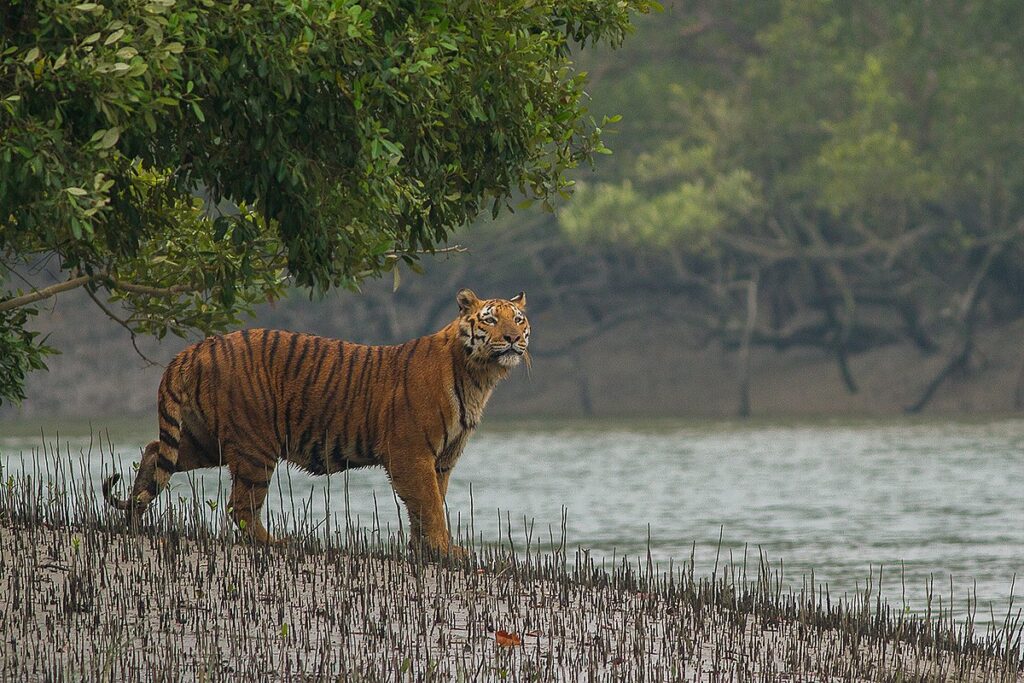
🌴 Exploring Sundarbans National Park: A Majestic Mangrove Wilderness 🐯
The Sundarbans National Park stands as one of the most unique ecosystems on our planet, where land and water merge to create a breathtaking mangrove forest teeming with diverse wildlife.
Expert Say
🌊 Introduction to the Magnificent Sundarbans 🌊
Hello there, Nature Lovers! Welcome to our comprehensive guide to the breathtaking Sundarbans National Park – a UNESCO World Heritage Site and one of the most magnificent mangrove forests in the world. Stretching across India and Bangladesh, this natural wonder is home to the famous Royal Bengal Tiger and countless other species that have adapted to this unique ecosystem.
The Sundarbans derives its name from the Sundari trees (Heritiera fomes) that dominate the landscape, creating a mesmerizing maze of waterways, mudflats, and small islands. As you journey through this article, we’ll uncover the secrets of this remarkable wilderness that serves as a critical buffer against cyclones and provides livelihoods to millions of people living in the surrounding areas.
https://www.google.com/maps/search/?api=1&query=Sundarbans+National+Park+India
| Sundarbans Quick Facts | Details |
|---|---|
| Location | Border of India and Bangladesh |
| Total Area | 10,000 sq km (4,000 sq km in India) |
| Established | 1984 |
| UNESCO Status | World Heritage Site (1987) |
| Main Vegetation | Mangrove forests |
| Famous Wildlife | Royal Bengal Tiger, Saltwater Crocodile |
| Best Time to Visit | October to March |
| Access | Primarily by boat |
🐯 Wildlife Wonders of Sundarbans 🐯
The Sundarbans National Park is renowned worldwide for being home to one of the largest populations of the Royal Bengal Tiger (Panthera tigris tigris). What makes these tigers truly remarkable is their adaptation to the mangrove ecosystem – they are excellent swimmers and have developed unique hunting strategies in this amphibious terrain. Unlike their counterparts in other forests, Sundarbans tigers have earned a reputation for being more aggressive, possibly due to the challenging environment they inhabit.
Beyond the iconic tigers, the Sundarbans houses an impressive array of wildlife including the saltwater crocodile (Crocodylus porosus), which can grow up to 20 feet in length, making it one of the largest reptiles on Earth. The waters are also home to the rare Irrawaddy dolphin and Ganges River dolphin, offering wildlife enthusiasts a chance to witness these magnificent creatures in their natural habitat.
🦌 Land Animals of Sundarbans
The terrestrial fauna of Sundarbans includes several species that have adapted to survive in the challenging mangrove environment. The spotted deer (Axis axis), also known as chital, forms a crucial part of the food chain and is the primary prey for the Bengal tiger. These graceful creatures can be spotted in herds, particularly during early mornings and late evenings when they venture out to feed.
Wild boars roam the forest floors, while rhesus macaques and grey langurs can be seen swinging through the canopy. The elusive fishing cat (Prionailurus viverrinus) has specialized in catching fish from the numerous waterways, showcasing the incredible adaptations of wildlife in this unique ecosystem.
🦅 Avian Diversity
Birdwatchers will find themselves in paradise at Sundarbans, with over 300 species of birds calling this region home. During winter, numerous migratory birds flock to these wetlands, creating a spectacular display of colors and sounds. Keep your binoculars ready for sightings of the majestic white-bellied sea eagle, the striking brahminy kite, and the elegant open-bill stork.
The mangrove canopy reverberates with the calls of kingfishers, herons, egrets, and woodpeckers. The critically endangered masked finfoot and the beautiful black-capped kingfisher are among the rare treasures that patient birdwatchers might be fortunate enough to spot during their excursions.
| Wildlife Category | Notable Species | Conservation Status |
|---|---|---|
| Big Cats | Royal Bengal Tiger | Endangered |
| Aquatic Mammals | Irrawaddy Dolphin, Ganges River Dolphin | Endangered |
| Reptiles | Saltwater Crocodile, King Cobra, Water Monitor | Various statuses |
| Ungulates | Spotted Deer, Wild Boar | Least Concern |
| Primates | Rhesus Macaque, Grey Langur | Least Concern |
| Birds | White-bellied Sea Eagle, Masked Finfoot | Various statuses |
| Invertebrates | Horseshoe Crab, Fiddler Crab | Various statuses |
🌿 Mangrove Ecosystem: Nature’s Marvel 🌿
The Sundarbans boasts the largest mangrove forest in the world, creating a complex ecosystem that straddles the boundary between land and sea. These remarkable trees have evolved specialized adaptations to survive in the harsh conditions of brackish water. The most distinctive feature is their elaborate root system – aerial roots, stilt roots, and pneumatophores (breathing roots) that rise above the mud to obtain oxygen, creating the iconic landscape that defines Sundarbans.
Mangroves serve as natural barriers against cyclones and tsunamis, protecting the densely populated areas beyond the forest. This ecosystem service was dramatically demonstrated during the 1999 super cyclone and the 2004 tsunami, when areas protected by mangroves suffered significantly less damage compared to unprotected coastlines. The dense network of roots also prevents soil erosion and helps in land reclamation by trapping sediments.
🌱 Flora Diversity
The vegetation of Sundarbans consists of 64 plant species that can survive in saline conditions. The dominant species include the Sundari trees (Heritiera fomes), from which the forest derives its name, along with Gewa (Excoecaria agallocha), Goran (Ceriops decandra), and Keora (Sonneratia apetala). These plants have developed remarkable adaptations such as vivipary (seeds germinate while still attached to the parent plant) and salt-filtering mechanisms in their tissues.
The understory vegetation includes numerous ferns, lichens, and algae that contribute to the overall biodiversity. Phoenix paludosa, a species of wild date palm, forms dense thickets in certain areas, while the climbing fern Acrostichum aureum adds to the vertical dimension of this unique forest.
🔄 Ecological Cycles
The mangrove ecosystem functions through intricate ecological cycles that maintain its delicate balance. The daily tidal influx brings nutrients from the rivers and the sea, nourishing the entire food web. When leaves and branches fall into the water, they decompose to form detritus, which serves as food for various aquatic organisms.
The mangrove roots provide nursery grounds for numerous fish, crustaceans, and mollusks, supporting both the ecological balance and the livelihoods of local fishing communities. This interconnected system demonstrates nature’s perfect engineering, where each element plays a vital role in sustaining the whole.
| Mangrove Characteristics | Description | Ecological Significance |
|---|---|---|
| Root Systems | Pneumatophores, Stilt Roots, Knee Roots | Oxygen absorption, Physical support |
| Adaptation to Salinity | Salt Excretion, Salt Exclusion | Survival in brackish water |
| Reproduction | Vivipary (Pre-germination on parent tree) | Adaptation to tidal environment |
| Leaf Structure | Thick, Waxy Cuticle | Water conservation |
| Ecosystem Services | Coastal Protection, Carbon Sequestration | Climate resilience, Carbon sink |
| Biodiversity Support | Nursery for Marine Life | Fisheries productivity |
| Soil Stabilization | Sediment Trapping | Land formation, Erosion control |
🚣♀️ Tourism and Exploration: Experiencing Sundarbans 🚣♀️
Visiting the Sundarbans offers a once-in-a-lifetime adventure for nature enthusiasts and wildlife photographers. The primary mode of exploration is by boat, allowing visitors to navigate through the intricate network of waterways that crisscross the forest. Several tour operators offer packages ranging from day trips to multi-day expeditions with overnight stays on boats or at forest lodges.
For the best experience, plan your visit during the winter months from October to March when the weather is pleasant, and wildlife sightings are more frequent. Summer brings intense heat and humidity, while the monsoon season (June to September) makes travel challenging due to heavy rainfall and the potential for cyclones.
🚢 Boat Safaris
The quintessential Sundarbans experience is the boat safari, which takes you deep into the mangrove forests. Traditional wooden boats called “dinghies” or larger vessels known as “launches” guide tourists through the narrow creeks and wider channels. The slow, quiet movement of these boats allows for excellent wildlife observation without disturbing the natural behavior of animals.
Early morning and late afternoon safaris yield the best wildlife sightings as animals are most active during these cooler parts of the day. While tiger sightings are rare and considered lucky, the thrill of exploring their territory and spotting their pug marks in the mud adds to the excitement of the journey.
🏕️ Accommodation Options
Accommodation in the Sundarbans ranges from basic to comfortable, with most options being floating houseboats or lodges at the forest periphery. The West Bengal Tourism Development Corporation operates tourist lodges at Sajnekhali, Bakkhali, and Jharkhali, providing decent amenities for visitors.
For a more immersive experience, several private operators offer package tours with accommodation on houseboats that anchor in the waterways at night. These floating hotels provide a unique opportunity to experience the sounds and sensations of the mangrove forest after dark, from the haunting calls of night birds to the gentle lapping of water against the boat.
| Tourism Information | Details | Remarks |
|---|---|---|
| Best Season | October to March | Moderate temperature, less rainfall |
| Entry Points | Godkhali, Namkhana, Canning (India) | Permit required for forest entry |
| Tour Duration | 1-5 days typical | Longer tours provide better wildlife opportunities |
| Accommodation | Houseboats, Forest Lodges | Pre-booking recommended |
| Essential Items | Binoculars, Camera, Insect Repellent | Light, neutral-colored clothing advised |
| Wildlife Sightings | Tigers, Deer, Crocodiles, Birds | Early morning and evening are best times |
| Activities | Boat Safaris, Bird Watching, Village Visits | All activities guided by forest department |
| Restrictions | No Night Travel in Core Area, No Noise | For wildlife and visitor safety |
🌍 Conservation Challenges and Efforts 🌍
The Sundarbans ecosystem faces numerous threats despite its protected status. Climate change poses perhaps the most significant long-term challenge, with rising sea levels threatening to submerge substantial portions of the forest. Studies suggest that sea levels in the region are rising at a rate faster than the global average, exacerbating the vulnerability of this low-lying delta.
Pollution from upstream industrial activities, particularly oil spills and chemical discharge, degrades water quality and harms aquatic life. Additionally, the increasing frequency and intensity of cyclones in the Bay of Bengal directly impact the forest structure and wildlife habitats, as evidenced by the destruction caused by Cyclone Amphan in 2020.
👥 Human-Wildlife Conflict
The proximity of human settlements to tiger habitats has led to one of the highest rates of human-tiger conflict in the world. Local villagers entering the forest for fishing, honey collection, or wood gathering occasionally become victims of tiger attacks, leading to negative attitudes toward conservation efforts.
To address this issue, initiatives like providing alternative livelihoods, installing solar-powered fencing around villages, and creating rapid response teams for tiger straying incidents have been implemented. The “Tiger Widows” – women who have lost their husbands to tiger attacks – are being supported through special economic rehabilitation programs.
🌱 Restoration and Protection Initiatives
Recognizing the ecological importance of the Sundarbans, both India and Bangladesh have implemented various conservation programs. Mangrove restoration projects aim to rehabilitate degraded areas and increase forest cover. The Joint Forest Management Committees involve local communities in conservation activities, fostering a sense of ownership and responsibility.
International organizations such as the World Wildlife Fund (WWF) and the United Nations Development Programme (UNDP) support conservation through technical expertise and funding. Innovative technologies like camera traps for monitoring tiger populations and satellite imagery for tracking forest cover changes have enhanced the effectiveness of conservation efforts in this challenging terrain.
| Conservation Challenges | Impact | Mitigation Strategies |
|---|---|---|
| Climate Change | Sea Level Rise, Increased Salinity | Mangrove Restoration, Buffer Zone Creation |
| Human Encroachment | Habitat Loss, Resource Extraction | Alternative Livelihoods, Community-Based Conservation |
| Human-Wildlife Conflict | Tiger Attacks, Retaliatory Killing | Warning Systems, Compensation Programs |
| Pollution | Water Contamination, Biodiversity Loss | Stricter Regulations, Clean-up Initiatives |
| Extreme Weather Events | Forest Damage, Erosion | Disaster-Resistant Infrastructure, Early Warning Systems |
| Poaching | Wildlife Trafficking, Population Decline | Anti-Poaching Patrols, Intelligence Networks |
| Invasive Species | Competition with Native Flora & Fauna | Monitoring Programs, Removal Initiatives |
📜 Cultural Significance and Local Communities 📜
The Sundarbans isn’t just a natural wonder; it’s deeply intertwined with the cultural identity of the people living in and around it. Local communities have developed unique traditions, folklore, and livelihood practices adapted to the challenging environment. The most prominent deity worshipped in the region is “Bonbibi” (the Lady of the Forest), considered the protector of honey collectors and fishermen who venture into the forest.
The annual Bonbibi festival brings together communities across religious divides, with both Hindus and Muslims participating in rituals seeking protection before entering the forest. This syncretic tradition reflects the deep respect for nature that characterizes the relationship between local people and their environment.
🎣 Traditional Livelihoods
For generations, communities surrounding the Sundarbans have depended on the forest and its waterways for their survival. Traditional occupations include fishing, honey collection, and gathering non-timber forest products like nipa palm leaves for thatching. These activities follow seasonal cycles and traditional knowledge systems that have evolved over centuries.
Honey collection, in particular, is a dangerous but culturally significant practice. Honey collectors or “Moulis” venture deep into the forest during April and May when the giant honeybees (Apis dorsata) build their combs. Armed with nothing more than smoke torches and traditional knowledge, these brave individuals face the dual threats of aggressive bees and lurking tigers to collect the prized wild honey.
🏘️ Adapting to Environmental Changes
As environmental conditions become increasingly challenging due to climate change and other pressures, local communities are adapting their lifestyles and livelihoods. Elevated houses on stilts, floating vegetable gardens, and rainwater harvesting systems demonstrate the remarkable resilience and innovation of these communities.
Several NGOs and government programs are working with local populations to develop climate-resilient agricultural practices and alternative income sources such as ecotourism, handicrafts, and sustainable aquaculture. These initiatives aim to reduce dependence on forest resources while improving living standards and building community resilience against natural disasters.
| Community Aspects | Features | Significance |
|---|---|---|
| Ethnic Groups | Bengali, Munda | Diverse cultural traditions |
| Religious Practices | Bonbibi Worship, Syncretic Traditions | Forest-dependent spiritual beliefs |
| Traditional Occupations | Fishing, Honey Collection, Wood Gathering | Direct dependence on ecosystem |
| Housing Style | Stilted Houses, Thatched Roofs | Adaptation to tidal environment |
| Folk Arts | Bhatiyali Songs, Tiger Dance | Cultural expressions of forest life |
| Traditional Knowledge | Weather Prediction, Navigation Skills | Passed down through generations |
| Contemporary Challenges | Climate Migration, Changing Livelihoods | Social and economic transitions |
📸 Photography Opportunities in Sundarbans 📸
The Sundarbans offers a paradise for photography enthusiasts with its unique landscapes and diverse wildlife. The interplay of light filtering through the dense mangrove canopy creates magical scenes, especially during the golden hours of early morning and late afternoon. The intricate root systems emerging from mudflats during low tide present abstract compositions that can result in award-winning photographs.
Wildlife photography in the Sundarbans requires patience, good equipment, and some luck. While tiger sightings are rare, capturing other wildlife such as spotted deer, crocodiles, and various bird species can be equally rewarding. A telephoto lens with image stabilization is essential due to the movement of the boat, which serves as your photography platform.
🌅 Landscape Photography
The mystical landscape of the Sundarbans transforms throughout the day with changing tides and light conditions. Dawn brings misty waterways and silhouettes of trees against the rising sun, while sunset bathes the forest in a golden glow. During low tide, the exposed mudflats with their patterns and the architectural marvel of pneumatophores (breathing roots) offer unique compositional opportunities.
For landscape photographers, a wide-angle lens helps capture the vastness of the mangrove forest, while a polarizing filter reduces glare from water surfaces and enhances the vibrant greens of the vegetation. Including a boat or traditional fishing net in the foreground can add a human element and sense of scale to your compositions.
🦜 Wildlife and Macro Photography
Beyond the charismatic tigers, the Sundarbans hosts a wealth of photogenic wildlife. Saltwater crocodiles basking on mudbanks, monitor lizards climbing tree trunks, and fiddler crabs with their oversized claws create fascinating subjects. The diverse birdlife, from kingfishers diving for fish to egrets in elegant flight, provides endless opportunities for bird photography.
Macro photography reveals a hidden world of adaptations – from the salt crystals on mangrove leaves to the tiny red crabs that scurry across the forest floor. The unique insect life, including colorful butterflies and dragonflies, adds another dimension to your photographic portfolio of this remarkable ecosystem.
| Photography Category | Subjects | Recommended Equipment |
|---|---|---|
| Landscape | Waterways, Sunrises/Sunsets, Root Systems | Wide-angle Lens, Polarizing Filter |
| Wildlife | Tigers, Deer, Crocodiles, Monitor Lizards | Telephoto Lens (300mm+), Stable Platform |
| Birds | Kingfishers, Eagles, Herons, Waders | Super-telephoto Lens, Fast Shutter Speeds |
| Macro | Crabs, Insects, Plant Adaptations | Macro Lens, Ring Flash, Tripod |
| Cultural | Fishing Boats, Local Villages, Honey Collectors | Standard Zoom Lens, Environmental Protection |
| Night | Starscapes, Bioluminescence | Wide Aperture Lens, Tripod, Remote Trigger |
| Underwater | Marine Life, Mangrove Roots | Waterproof Housing, Specialized Lighting |
🧠 Scientific Research and Discoveries 🧠
The Sundarbans serves as a living laboratory for scientific research across multiple disciplines. Ecologists study the complex food webs and energy flows within this productive ecosystem, while botanists investigate the remarkable adaptations of mangrove plants to saline conditions. The unique behavioral adaptations of the Sundarbans tigers continue to fascinate wildlife biologists, who are working to understand how these big cats have adapted to living in such a challenging aquatic environment.
Recent research has highlighted the Sundarbans’ importance as a carbon sink, with studies indicating that mangrove forests can sequester carbon at rates up to five times higher than tropical rainforests. This finding has elevated the significance of mangrove conservation in global climate change mitigation strategies.
🔬 Biodiversity Studies
Ongoing biodiversity surveys continue to reveal new species and range extensions in the Sundarbans. Marine biologists have documented the rich aquatic biodiversity in the estuarine waters, including discoveries of new fish species and crustaceans. Entomologists explore the diverse insect life, many species of which play crucial roles in pollination and nutrient cycling within the ecosystem.
Genetic studies on the Bengal tiger population in Sundarbans have revealed interesting adaptations and potential subspecies characteristics that distinguish them from their mainland counterparts. These findings have implications for conservation strategies and understanding evolutionary processes in isolated populations.
📊 Climate Change Research
The Sundarbans serves as a crucial site for studying the impacts of climate change on coastal ecosystems. Research stations monitor sea-level rise, changing salinity patterns, and shifts in species distribution. The data collected helps in developing predictive models for future ecological changes and informs adaptation strategies for both the ecosystem and human communities dependent on it.
Researchers are also studying the mangroves’ resilience to extreme weather events, which provides valuable insights into natural adaptation processes. The knowledge gained from these studies contributes to global understanding of climate change impacts on similar ecosystems worldwide and helps in designing effective conservation interventions.
| Research Areas | Focus Topics | Applications |
|---|---|---|
| Ecology | Food Webs, Energy Flow, Species Interactions | Ecosystem Management |
| Tiger Behavior | Swimming Patterns, Hunting Strategies, Home Ranges | Conservation Planning |
| Botany | Salinity Tolerance, Reproductive Strategies | Restoration Techniques |
| Hydrology | Tidal Patterns, Sedimentation, Channel Dynamics | Flood Management |
| Climate Science | Sea Level Rise, Extreme Weather Events | Adaptation Strategies |
| Anthropology | Traditional Knowledge, Community Adaptations | Cultural Preservation |
| Marine Biology | Estuarine Species, Fisheries Productivity | Sustainable Harvesting |
🌡️ Climate and Best Time to Visit 🌡️
The Sundarbans experiences a tropical monsoon climate with distinct seasonal variations that significantly impact the visitor experience. The region receives an average annual rainfall of about 1,600-1,800 mm, with most precipitation occurring during the monsoon months from June to September. Humidity remains high throughout the year, typically ranging from 70% to 90%.
Temperature variations create three primary seasons: winter (November to February) with temperatures ranging from 12°C to 24°C, summer (March to May) with temperatures soaring to 35°C-45°C, and the monsoon season (June to September) characterized by heavy rainfall and storms. Each season offers a different perspective on the forest’s ecology and wildlife behavior.
🍂 Winter: The Ideal Season
Winter (November to February) is widely considered the best time to visit the Sundarbans. The pleasant temperatures, clear skies, and reduced rainfall create ideal conditions for wildlife viewing and boat safaris. The cooler weather prompts animals to be more active during daylight hours, increasing your chances of significant sightings.
This season also coincides with the arrival of migratory birds, adding to the biodiversity spectacle. The reduced water levels in some channels expose more mudflats, making it easier to spot crocodiles basking in the sun and monitor lizards foraging along the banks.
☔ Monsoon: The Forest Reborn
While most tourism activities are restricted during the peak monsoon months due to safety concerns, this season transforms the Sundarbans into a lush, vibrant ecosystem. The heavy rainfall rejuvenates the forest, and new growth emerges everywhere. The challenging conditions during this time mean fewer visitors, providing a more solitary experience for those who do venture in during the early or late monsoon periods.
For researchers and serious nature enthusiasts, the monsoon offers unique insights into ecological processes such as seed dispersal, nutrient cycling, and the forest’s response to freshwater influx. However, visitors should be prepared for potential disruptions due to weather conditions and limited access to certain areas.
| Season | Months | Temperature | Rainfall | Wildlife Activity | Tourism Suitability |
|---|---|---|---|---|---|
| Winter | November-February | 12°C-24°C | Low | High | Excellent (Peak Season) |
| Summer | March-May | 25°C-45°C | Low to Moderate | Moderate (Early Morning/Evening) | Good to Moderate |
| Monsoon | June-September | 25°C-35°C | Heavy | Variable | Limited/Not Recommended |
| Post-Monsoon | October | 20°C-30°C | Moderate to Low | Increasing | Good (Shoulder Season) |
🛣️ How to Reach Sundarbans 🛣️
Accessing the Sundarbans requires a combination of transportation modes, as the forest’s remote location and waterlogged terrain make it accessible primarily by boat. Most visitors approach from the Indian side via Kolkata, which serves as the main gateway city with excellent air, rail, and road connectivity to the rest of India and international destinations.
From Kolkata, the journey typically involves road travel to one of several embarkation points such as Godkhali, Canning, or Namkhana, followed by a boat ride into the forest. The entire journey from Kolkata to the heart of Sundarbans can take between 3-6 hours depending on your starting point, mode of transport, and final destination within the park.
🚗 Road and Rail Access
From Kolkata, visitors can drive approximately 100 km (62 miles) south to Godkhali, which is the most popular entry point to the Sundarbans. The journey takes about 3-4 hours depending on traffic conditions. Alternatively, one can take a train from Sealdah station in Kolkata to Canning (approximately 1.5 hours), followed by a jeep or auto-rickshaw ride to the boat embarkation point.
Public buses also operate from Kolkata’s Esplanade to various towns near the Sundarbans such as Basanti, Gosaba, and Namkhana. These services are economical but may not run on fixed schedules and can be crowded during peak seasons.
⛵ Boat Transportation
Once you reach the embarkation points, motorized boats become the primary mode of transportation. Forest department-approved boats with licensed guides are mandatory for exploring the protected areas. These range from small country boats for short excursions to larger houseboats (launches) equipped with sleeping cabins, dining facilities, and observation decks for multi-day tours.
The network of waterways within the Sundarbans is complex, with channels ranging from wide rivers to narrow creeks. Navigation requires experienced local boatmen familiar with the changing tides, underwater sandbanks, and restricted zones within the forest. Most tour operators handle these logistics as part of their packages, ensuring a safe and compliant journey through this magnificent but challenging terrain.
| Route | Transportation Mode | Duration | Remarks |
|---|---|---|---|
| Kolkata to Godkhali | Car/Bus | 3-4 hours | Most popular route |
| Kolkata to Canning | Train | 1.5 hours | Followed by road transfer |
| Canning to Boat Jetty | Auto/Jeep | 30-45 minutes | Local transport available |
| Godkhali to Sundarbans | Motorboat | 1-2 hours | Entry permit required |
| Namkhana to Sundarbans | Ferry/Motorboat | 1.5-2.5 hours | Alternative entry point |
| Bangladesh Access | Via Khulna | Varies | Separate permits required |
| Internal Navigation | Various Boats | Varies | Guided tours only |
💧 Hydrological Importance of Sundarbans 💧
The Sundarbans forms one of the world’s largest delta systems where the Ganges, Brahmaputra, and Meghna rivers converge and empty into the Bay of Bengal. This complex hydrological system is characterized by a network of rivers, streams, and creeks that continually reshape the landscape through processes of erosion and deposition. The daily tidal variations, ranging from 3-5 meters, create a dynamic environment where land is alternately submerged and exposed.
This tidal action plays a crucial role in nutrient cycling, seed dispersal, and maintaining the salinity gradient that supports the unique biodiversity of the region. The influx of freshwater from the rivers mixes with saline water from the Bay of Bengal, creating variable salinity zones that host different assemblages of plant and animal species adapted to specific conditions.
🌊 Tidal Dynamics and Island Formation
The interplay between river discharge, tidal currents, and sediment transport continually reshapes the Sundarbans landscape. New islands form as sediments are deposited, while others erode and disappear. This natural process of land formation and erosion creates a mosaic of habitats at different successional stages, contributing to the overall biodiversity.
Researchers monitor these geomorphological changes using satellite imagery and field measurements, providing insights into the dynamic nature of this delta system. Understanding these processes is essential for predicting future landscape changes, especially in the context of climate change and rising sea levels.
🚰 Freshwater Resource Management
The Sundarbans serves as a vital freshwater resource for surrounding communities, with numerous ponds and channels providing water for drinking, agriculture, and aquaculture. However, salinity intrusion due to reduced freshwater flow from upstream dams, combined with sea-level rise, threatens this essential resource.
Innovative approaches to freshwater management include rainwater harvesting systems, floating agricultural practices, and the selection of salt-tolerant crop varieties. Community-based water management committees work to maintain freshwater ponds and protect them from contamination and salinity intrusion, ensuring sustainable access to this precious resource in a challenging environment.
| Hydrological Feature | Characteristics | Ecological Function |
|---|---|---|
| Tidal Amplitude | 3-5 meters variation | Nutrient distribution, Habitat creation |
| Salinity Gradient | Fresh to Brackish to Saline | Species zonation, Adaptation driver |
| River Discharge | Seasonal variation | Sediment transport, Nutrient input |
| Sedimentation | 2.4 billion tons annually | Land formation, Delta building |
| Channel Network | Hierarchical pattern | Water circulation, Species movement |
| Erosion Processes | Bank collapse, Channel migration | Habitat renewal, Succession initiation |
| Groundwater Dynamics | Shallow aquifers, Saline intrusion | Freshwater availability, Vegetation support |
🍲 Cuisine and Culinary Traditions 🍲
The culinary traditions of the Sundarbans region reflect the intimate relationship between local communities and their natural environment. Seafood dominates the local diet, with fish, crabs, prawns, and other aquatic creatures prepared in distinctive styles that have evolved over generations. The famous “Bhapa Ilish” (steamed hilsa fish with mustard paste) represents the pinnacle of Bengali fish preparation and is particularly delicious when prepared with fish caught in the estuarine waters of the Sundarbans.
Rice serves as the staple food, often complemented by a variety of vegetables grown in homestead gardens or collected from the forest fringes. Wild honey from the Sundarbans adds a unique flavor to desserts and is prized for its distinctive taste and medicinal properties. The culinary traditions incorporate locally available ingredients and preservation techniques adapted to the challenging conditions of this remote region.
🦀 Seafood Specialties
The rivers and creeks of Sundarbans yield an abundance of seafood that forms the protein backbone of local cuisine. Mud crabs, known locally as “Bora Kankra,” are a delicacy prepared with indigenous spice blends. Various fish species including Bhekti (Asian seabass), Parshe (mullet), and Parse (tiger prawn) feature prominently in daily meals, prepared using techniques like steaming in banana leaves, slow cooking in earthen pots, or frying with aromatic spices.
Traditional fishing methods such as using bamboo traps and nets constructed from natural fibers still persist alongside modern techniques. These sustainable harvesting practices, developed over centuries, ensure that communities can continue to rely on these resources without depleting them.
🌿 Forest Foraging Traditions (continued)
Beyond cultivated foods, the forest provides numerous edible plants, fruits, and honey that supplement the local diet. Nipa palm sap is collected to make a sweet syrup or fermented into a mildly alcoholic beverage. Various tender leaves, shoots, and wild fruits are incorporated into traditional dishes, adding unique flavors and nutritional diversity.
The knowledge of edible plants, their seasonal availability, and preparation methods is passed down through generations as valuable cultural heritage. This traditional ecological knowledge includes understanding which plants can detoxify water, which have medicinal properties, and which can be consumed during food scarcity periods such as after cyclones.
| Culinary Element | Notable Examples | Preparation Styles |
|---|---|---|
| Fish Varieties | Hilsa, Bhekti, Parshe, Tangra | Steamed, Fried, Curry, Dry Fish |
| Crustaceans | Mud Crabs, Tiger Prawns, Shrimps | Spicy Curries, Stir-Fried |
| Wild Greens | Neem Leaf, Pui Shaak, Sundari Leaf | Stir-Fried, Steamed, Mixed with Dal |
| Forest Products | Wild Honey, Palm Sugar, Forest Fruits | Desserts, Preserves |
| Preservation Methods | Sun Drying, Smoking, Fermentation | Seasonal Storage Techniques |
| Rice Varieties | Traditional Strains, Salt-Tolerant Rice | Steamed, Puffed, Rice Flour Products |
| Spice Blends | Mustard, Panch Phoron, Chili | Unique Regional Combinations |
🎭 Legends and Folklore of Sundarbans 🎭
The mystical landscape of the Sundarbans has inspired a rich tapestry of legends, myths, and folklore that reflect human attempts to understand and coexist with this powerful natural environment. The most prominent among these is the cult of Bonbibi (the Lady of the Forest), a protective deity believed to safeguard forest-goers from tigers and other dangers. According to local legend, Bonbibi was sent by Allah to protect the inhabitants of the forest from the demon king Dakkhin Rai, who often takes the form of a tiger.
This syncretic belief system transcends religious boundaries, with both Hindus and Muslims participating in rituals before entering the forest. The Bonbibi temples feature distinctive architectural elements and iconography that blend Islamic and Hindu traditions, serving as powerful symbols of religious harmony in the region.
📚 Tiger Tales and Superstitions
Tigers feature prominently in the folklore of Sundarbans, often attributed with supernatural powers and human-like intelligence. Local beliefs hold that tigers can become possessed by evil spirits or can be the reincarnation of people who committed grave misdeeds in their human lives. Certain villages maintain the tradition of wearing masks on the back of their heads when entering the forest, based on the belief that tigers prefer to attack from behind.
Numerous stories tell of tigers who can change their shape, understand human language, or remember and seek revenge against specific individuals. These narratives reflect the complex relationship between humans and these apex predators in a landscape where their territories inevitably overlap.
🎵 Cultural Expressions
The unique environment and lifestyle of the Sundarbans have inspired distinctive forms of cultural expression. “Bhatiyali” songs – traditionally sung by boatmen navigating the complex waterways – capture the melancholy and beauty of life in this challenging terrain. These haunting melodies speak of the struggles, fears, and occasional triumphs of those who make their living from the forest and waters.
The performance tradition of “Bonbibi Pala” (The Saga of Bonbibi) enacts the mythological story of the forest goddess through a combination of song, dance, and drama. This folk theater tradition serves both entertainment and educational purposes, transmitting ecological knowledge, ethical values, and safety practices to new generations of forest-dependent communities.
| Folklore Element | Description | Cultural Significance |
|---|---|---|
| Bonbibi | Forest Goddess | Protection deity for forest workers |
| Dakkhin Rai | Tiger Demon King | Representation of forest dangers |
| Ghost Villages | Abandoned settlements | Memory of disasters and tiger attacks |
| Dokkhin Rai Pala | Theatrical Performance | Cultural transmission of forest knowledge |
| Tiger Charms | Protective Amulets | Traditional safety measures |
| Bhatiyali Songs | Boatmen’s Music | Expression of riverine life challenges |
| Gazi-Kalu Legends | Muslim Saints | Religious syncretism in forest worship |
🔮 Future of Sundarbans: Challenges and Hopes 🔮
The Sundarbans stands at a critical juncture, facing unprecedented challenges from climate change, development pressures, and resource exploitation. Scientific projections suggest that without significant reduction in global carbon emissions, rising sea levels could submerge substantial portions of the low-lying forest by the end of this century. Increasing salinity threatens the survival of the Sundari trees from which the forest derives its name, leading to concerning shifts in vegetation composition.
Yet amidst these challenges, there are promising signs of resilience and adaptation. Innovative conservation approaches, stronger international cooperation, and growing recognition of the ecosystem’s global importance offer hope for its preservation. The designation of Sundarbans as a UNESCO World Heritage Site has brought increased attention and resources for conservation efforts.
🌱 Sustainable Development Initiatives
Balancing conservation with the needs of local communities presents a complex challenge that requires innovative approaches. Sustainable development initiatives focus on creating alternative livelihoods that reduce direct dependence on forest resources while improving living standards. Eco-tourism, sustainable aquaculture, handicraft production, and organic agriculture are being promoted as environmentally compatible economic activities.
Projects involving solar power installation, improved cooking stoves, and rainwater harvesting systems are reducing pressure on forest resources while improving quality of life. Community-based organizations play a crucial role in implementing these initiatives, ensuring they align with local needs and cultural contexts.
🌏 International Cooperation
The transboundary nature of the Sundarbans ecosystem, spanning India and Bangladesh, necessitates coordinated conservation efforts between the two countries. Recent years have seen improved bilateral cooperation, with joint monitoring programs, information sharing, and synchronized management approaches. International organizations provide technical and financial support for conservation initiatives, recognizing the global significance of this unique ecosystem.
Research collaborations between international and local institutions are generating valuable knowledge about the ecosystem’s functioning and resilience mechanisms. This scientific understanding informs adaptive management strategies that can respond to emerging challenges and changing conditions, offering the best hope for preserving this irreplaceable natural heritage for future generations.
| Future Aspect | Challenges | Potential Solutions |
|---|---|---|
| Climate Adaptation | Sea Level Rise, Extreme Weather | Mangrove Restoration, Raised Embankments |
| Livelihood Security | Resource Limitations, Population Pressure | Alternative Income Sources, Skill Development |
| Biodiversity Conservation | Habitat Fragmentation, Species Decline | Corridor Protection, Breeding Programs |
| Water Management | Salinity Intrusion, Freshwater Scarcity | Rainwater Harvesting, Regulated Extraction |
| Energy Transition | Deforestation for Fuel, Carbon Emissions | Solar Power, Improved Cookstoves |
| Research Needs | Data Gaps, Monitoring Challenges | Remote Sensing, Citizen Science |
| Governance | Cross-border Coordination, Enforcement | Joint Management Bodies, Community Participation |
📱 Digital Exploration and Virtual Tours 📱
The digital revolution has opened new avenues for experiencing and understanding the Sundarbans without physically visiting this fragile ecosystem. Virtual tours using 360-degree photography and videography allow armchair travelers to navigate through mangrove channels, explore forest trails, and even encounter wildlife from the comfort of their homes. These digital experiences serve both educational and conservation purposes by raising awareness about this unique ecosystem while reducing physical tourism pressure.
Several conservation organizations and educational institutions have developed comprehensive virtual experiences of the Sundarbans complete with expert narration, informative overlays, and interactive elements. These digital resources are particularly valuable for schools and universities, enabling students to explore remote ecosystems that would otherwise remain inaccessible to most.
📊 Apps and Digital Tools
Mobile applications dedicated to the Sundarbans offer a range of functionalities for both virtual and in-person explorers. Bird identification apps help visitors recognize the numerous avian species, while navigation apps designed specifically for the complex waterways assist tour operators in planning safe routes. Citizen science apps enable visitors to contribute to conservation efforts by recording wildlife sightings and environmental observations.
For researchers and conservation practitioners, specialized digital tools including GIS mapping applications, remote sensing data platforms, and environmental monitoring dashboards provide valuable information about ecosystem changes, wildlife movements, and threats requiring intervention. These technological tools enhance the effectiveness of conservation efforts in this challenging terrain.
🎮 Gaming and Interactive Learning
Educational games based on the Sundarbans ecosystem engage younger audiences while imparting valuable knowledge about ecological processes and conservation challenges. Role-playing games where players manage a virtual protected area or navigate the complexities of being a forest ranger create immersive learning experiences that foster empathy and understanding.
Augmented reality (AR) applications overlay digital information onto the physical world, enhancing visitor experiences at interpretation centers and museum exhibits related to the Sundarbans. These interactive technologies make complex ecological concepts more accessible and engaging for diverse audiences, building broader support for conservation efforts.
| Digital Tool | Primary Function | Target Users |
|---|---|---|
| Virtual Tours | Remote Exploration | Students, Distant Enthusiasts |
| Wildlife ID Apps | Species Identification | Tourists, Bird Watchers |
| Navigation Systems | Safe Route Planning | Tour Operators, Visitors |
| Citizen Science Platforms | Data Collection | Visitors, Researchers |
| AR Experiences | Enhanced Interpretation | Museum Visitors, Students |
| Educational Games | Ecological Learning | Children, Young Adults |
| Monitoring Dashboards | Conservation Management | Rangers, Researchers |
Keywords: Sundarbans mangrove forest, Royal Bengal Tiger habitat, UNESCO World Heritage Site Sundarbans, Mangrove ecosystem conservation, Sundarbans wildlife tourism
If you enjoyed learning about the Sundarbans National Park, you might also be interested in:
- Exploring the Biodiversity of Indian National Parks
- Tips for Wildlife Photography in Mangrove Ecosystems
- The Impact of Climate Change on Coastal Protected Areas
The Sundarbans stands as a testament to nature’s resilience and adaptability, where life flourishes in one of the most challenging environments on Earth. This unique ecosystem not only provides a haven for endangered wildlife but also offers invaluable lessons on coexistence between humans and nature. As we face the growing challenges of climate change and biodiversity loss, the conservation of this remarkable wilderness becomes not just a regional priority but a global imperative.
Interesting read. I bookmarked this for future reference. [XQ7T9]
This post perfectly captures the magic of the Sundarbans. Your mention of how species have uniquely adapted to that mangrove ecosystem is so fascinating—it’s a place like no other. I was reading more about mangrove conservation on https://thaiwir.com recently, and it really deepened my appreciation for fragile ecosystems like this one. Thanks for the great guide!