

The Mountain Railways of India are an amazing example of engineering, culture, and natural beauty.
Expert Says
🚂 Mountain Railways of India: A Journey Through Breathtaking Heights 🏔️
The Mountain Railways of India represent a remarkable feat of engineering, cultural heritage, and natural beauty. These historic railway systems have transformed accessibility to some of India’s most challenging terrains while preserving their unique charm and significance.
Hello, Railway Lovers! Today we’re embarking on a fascinating journey through India’s magnificent mountain railways. These engineering marvels aren’t just modes of transportation—they’re living heritage that continues to enchant travelers from around the world. As we explore these remarkable railway systems, you’ll discover why they’ve earned their prestigious UNESCO World Heritage status and why they should be on every traveler’s bucket list.
🏆 UNESCO World Heritage Status and Historical Significance 🏛️
The Mountain Railways of India represent one of the most impressive collections of mountain railways in the world. Between 1999 and 2008, UNESCO recognized their outstanding universal value by inscribing them on the World Heritage List. This prestigious designation acknowledges not only their engineering brilliance but also their cultural and historical significance.
These railways were built during the British colonial era in the late 19th and early 20th centuries, primarily to connect the plains with hill stations that served as summer retreats for the British. The engineers who designed these railways faced tremendous challenges in creating viable transportation systems through steep, mountainous terrain.
What makes these railways truly remarkable is that they implemented innovative engineering solutions while minimizing disruption to the surrounding environment. Using technologies such as rack-and-pinion, zigzag reverses, and multi-arch galleries, these railways demonstrate human ingenuity at its finest.
Today, these railways continue to function largely in their original form, using much of their original equipment, which is a testament to the quality of their design and construction. They represent living examples of the technological and material exchange between Western and Indian engineers during the colonial period.
🧠 Engineering Marvels of the Colonial Era
The construction of these mountain railways required extraordinary problem-solving skills and adaptation to extremely difficult terrain. British engineers, working alongside Indian counterparts, developed innovative solutions to overcome gravity and geography.
The use of the rack-and-pinion system on the Nilgiri Railway, for example, was a brilliant response to the extremely steep gradients. Similarly, the zigzag reversals and loop lines of the Darjeeling Himalayan Railway demonstrate creative approaches to gaining elevation in limited space.
These engineering solutions weren’t merely functional—they were also designed to blend harmoniously with the surrounding landscape, creating railway experiences that are as aesthetically pleasing as they are technically impressive.
🔄 Cultural Exchange and Knowledge Transfer
The construction of these railways fostered significant cultural and technological exchange between European and Indian engineers. Traditional knowledge combined with modern engineering principles to create systems uniquely adapted to India’s challenging mountain environments.
This collaborative process contributed to the development of engineering expertise in India and established new standards for railway construction in mountainous regions worldwide. The legacy of this exchange continues to influence modern engineering practices in challenging terrains.
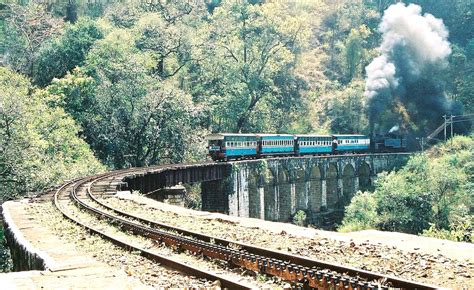
🚂 The Five Mountain Railways: Unique Characteristics and Routes 🛤️
India’s mountain railways consist of five distinct railway systems, each with its own unique characteristics, history, and charm. Together, they offer a comprehensive view of how railway technology was adapted to various mountainous environments across the subcontinent.
The five mountain railways of India include the Darjeeling Himalayan Railway, the Nilgiri Mountain Railway, the Kalka-Shimla Railway, the Kangra Valley Railway, and the Matheran Hill Railway. Each serves different regions and showcases different technical solutions to the challenge of mountain railway construction.
What unites these railways is their continued operation using largely original equipment and methods. Riding these trains today offers an authentic experience that has changed little in over a century, allowing travelers to step back in time while enjoying breathtaking mountain scenery.
Below is a detailed comparison of these magnificent railway systems:
| Railway | Location | Established | Length | Max Elevation | Notable Features |
|---|---|---|---|---|---|
| Darjeeling Himalayan Railway | West Bengal | 1881 | 78 km | 2,258 m | Z-reverses, loops, “Toy Train” |
| Nilgiri Mountain Railway | Tamil Nadu | 1908 | 46 km | 2,203 m | Rack and pinion technology |
| Kalka-Shimla Railway | Himachal Pradesh | 1903 | 96 km | 2,076 m | 103 tunnels, 864 bridges |
| Kangra Valley Railway | Himachal Pradesh | 1929 | 164 km | 1,290 m | 993 bridges, scenic valley views |
| Matheran Hill Railway | Maharashtra | 1907 | 20 km | 803 m | Horseshoe embankments |
🏔️ Darjeeling Himalayan Railway: The Pioneering “Toy Train”
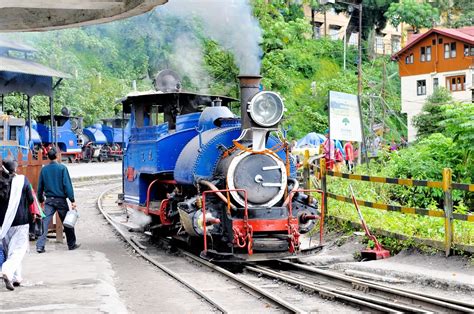
The Darjeeling Himalayan Railway (DHR), affectionately known as the “Toy Train,” was the first of India’s mountain railways to be constructed and the first to receive UNESCO World Heritage status in 1999. Running between New Jalpaiguri and Darjeeling in West Bengal, this 78-kilometer narrow-gauge railway climbs from 100 meters to over 2,200 meters above sea level.
What makes the DHR truly special is its innovative use of zigzag reverses and loops to gain elevation. The famous Batasia Loop, where the track spirals around itself to gain height, is an engineering masterpiece and offers panoramic views of the Kanchenjunga mountain range.
The steam locomotives that still operate on this line are over 100 years old, making the DHR not just a means of transportation but a living museum of railway history. The journey from New Jalpaiguri to Darjeeling takes approximately 7 hours, allowing passengers to fully immerse themselves in the changing landscapes and cultures of the region.
🌄 Nilgiri Mountain Railway: Conquering Steep Gradients
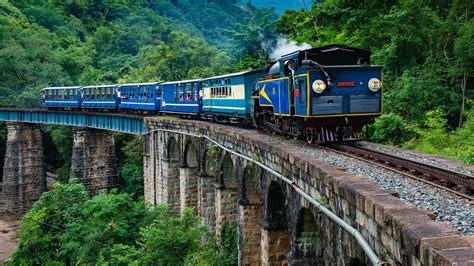
The Nilgiri Mountain Railway (NMR) in Tamil Nadu, recognized by UNESCO in 2005, is unique for its use of rack-and-pinion technology to navigate extremely steep gradients. Running between Mettupalayam and Ooty (Udhagamandalam), this 46-kilometer line climbs from 326 meters to 2,203 meters above sea level.
The steepest section of the NMR has a gradient of 1 in 12.5, making it one of the steepest railway tracks in Asia. To conquer this challenging terrain, the railway employs the Abt rack system, where cogwheels on the locomotive engage with a toothed rack rail, providing additional traction.
The journey on the NMR offers spectacular views of the Nilgiri Hills, dense forests, tea plantations, and numerous tunnels and bridges. The blue and cream carriages of the NMR have become iconic, featuring in numerous films and photographs that capture the romance of mountain rail travel.
🌲 Kalka-Shimla Railway: The Most Accessible Heritage Line
The Kalka-Shimla Railway (KSR), inscribed on the UNESCO list in 2008, connects the plains of Haryana with the hill station of Shimla in Himachal Pradesh. This 96-kilometer narrow-gauge railway passes through 103 tunnels and crosses 864 bridges, creating one of the most picturesque railway journeys in India.
What distinguishes the KSR is its accessibility and relatively higher speed compared to other mountain railways. The journey from Kalka to Shimla takes approximately 5-6 hours, making it possible to experience this heritage railway even on a limited schedule.
The railway played a crucial role in the British colonial administration, as Shimla served as the summer capital of British India. Today, the KSR continues to be an important transportation link while preserving its heritage character through carefully maintained stations, tunnels, and bridges.
🏞️ Kangra Valley Railway: The Scenic Marvel
The Kangra Valley Railway, while not yet on the UNESCO list, is an integral part of India’s mountain railway heritage. Running between Pathankot and Joginder Nagar in Himachal Pradesh, this 164-kilometer narrow-gauge line offers some of the most spectacular views of the Dhauladhar mountain range.
What makes the Kangra Valley Railway special is its route through the agriculturally rich Kangra Valley, providing passengers with ever-changing views of terraced fields, pine forests, and snow-capped mountains. The railway crosses nearly 1,000 bridges and passes through some of the most pristine landscapes in northern India.
The journey on the Kangra Valley Railway is unhurried, taking approximately 10 hours from end to end, allowing passengers to fully appreciate the natural beauty and cultural diversity of the region. The railway continues to serve as an important transportation link for local communities while attracting enthusiasts from around the world.
🌳 Matheran Hill Railway: The Eco-friendly Mountain Line
The Matheran Hill Railway, connecting Neral with Matheran in Maharashtra, is the youngest of India’s mountain railways, completed in 1907. Though the shortest at just 20 kilometers, it offers a unique experience as it serves Matheran, which remains one of the few automobile-free hill stations in India.
What distinguishes the Matheran Hill Railway is its harmonious integration with the environment. The railway was constructed with minimal disruption to the surrounding forests, using horseshoe embankments rather than extensive cutting and filling to navigate the terrain.
The journey on the Matheran Hill Railway offers spectacular views of the Western Ghats and the coastal plains below. The final approach to Matheran, along a ridge with drops on both sides, is particularly dramatic and provides a thrilling conclusion to this heritage railway experience.
🌟 Tourist Experience and Practical Information 🧳
The Mountain Railways of India offer visitors a unique blend of natural beauty, cultural heritage, and engineering appreciation. These railways aren’t just transportation systems—they’re comprehensive tourist experiences that engage all the senses and connect travelers with India’s mountainous regions in a meaningful way.
For many tourists, riding these heritage railways is a bucket-list experience that combines nostalgia, adventure, and cultural immersion. The unhurried pace of these trains allows passengers to fully appreciate the changing landscapes, interact with local communities, and experience the mountains in ways that modern, faster transportation doesn’t permit.
Each railway offers a different experience in terms of scenery, climate, and cultural context. The Darjeeling Himalayan Railway provides Himalayan vistas and tea plantations, the Nilgiri Mountain Railway showcases dense forests and colonial hill stations, while the Kalka-Shimla Railway offers architectural splendors alongside mountain panoramas.
| Railway | Best Season | Journey Time | Ticket Price Range (INR) | Special Trains | Photography Spots |
|---|---|---|---|---|---|
| Darjeeling Himalayan Railway | Oct-May | 7-8 hours | 1,300-1,500 | Joy Rides, Steam Specials | Batasia Loop, Ghoom |
| Nilgiri Mountain Railway | Sep-Mar | 4-5 hours | 205-1,100 | Heritage Steam | Coonoor, Wellington |
| Kalka-Shimla Railway | Apr-Jun, Sep-Nov | 5-6 hours | 300-800 | Shivalik Express, Rail Motor | Barog, Shimla Station |
| Kangra Valley Railway | Oct-Apr | 9-10 hours | 55-75 | Regular Passenger | Kangra Fort View, Palampur |
| Matheran Hill Railway | Oct-May | 2-3 hours | 75-300 | Weekend Specials | One Kiss Tunnel, Panorama Point |
🎫 Booking and Reservation Tips
Securing tickets for these popular heritage railways requires some planning, especially during peak tourist seasons. The Indian Railways offers both online and offline booking options, with varied classes of service depending on the specific railway.
For the Darjeeling and Nilgiri railways, which are extremely popular with international tourists, booking several weeks in advance is recommended. The Kalka-Shimla Railway offers special tourist trains like the Himalayan Queen and the luxury Shivalik Express, which provide enhanced comfort for visitors.
Foreign tourists can also book through the Foreign Tourist Quota, which sets aside a limited number of seats specifically for international visitors. This can be particularly useful during India’s holiday seasons when domestic tourism peaks.
🗓️ Best Time to Visit Each Railway
The mountain railways traverse diverse climate zones, making seasonal considerations important for planning your journey. Generally, the post-monsoon (October-November) and pre-summer (February-April) periods offer the most pleasant weather and clearest views.
The Darjeeling and Kalka-Shimla railways offer spectacular views of snow-covered mountains during winter (December-January), though occasional service disruptions can occur during heavy snowfall. The Nilgiri and Matheran railways are best experienced during the cooler months (October-March) when the forests are lush following the monsoon.
Summer months (April-June) can be crowded, especially on the Kalka-Shimla and Nilgiri railways, as Indians seek respite from the heat of the plains. The monsoon season (July-September) brings lush green landscapes but can also lead to occasional service disruptions due to landslides or heavy rainfall.
📸 Photography and Sightseeing Opportunities
The mountain railways offer exceptional photography opportunities, with each line having signature locations that are favorites among railway enthusiasts and photographers. The Batasia Loop on the Darjeeling line, the Barog station on the Kalka-Shimla route, and the Hillgrove station on the Nilgiri railway are particularly photogenic.
Many of the railways offer “joy rides” or shorter segments that focus on the most scenic portions of the routes. These are perfect for visitors with limited time or those specifically interested in photography rather than the complete journey.
Several heritage stations along these routes have been preserved in their original colonial-era appearance, offering excellent opportunities for architectural photography and a glimpse into the past. Ghoom Station on the Darjeeling line, for example, houses a small railway museum that showcases the history of this pioneering mountain railway.
🍲 Culinary Experiences Along the Routes
One of the joys of traveling on India’s mountain railways is experiencing the changing culinary landscapes as the trains ascend from the plains to the mountains. Each railway passes through regions with distinct food traditions, offering passengers a taste of local cuisines.
On the Darjeeling Himalayan Railway, the stops at Kurseong and Ghoom provide opportunities to sample Tibetan momos, Nepali thukpa, and Darjeeling’s famous tea. The Nilgiri Mountain Railway introduces travelers to South Indian specialties like dosas at Coonoor, while the Kalka-Shimla line offers Himachali delicacies at various station canteens.
Many regular passengers have their favorite trackside vendors who have been serving food to train travelers for generations. These impromptu food stops become part of the railway experience and offer authentic local flavors that you might not find in guidebooks.
🌿 Sustainability and Conservation Efforts
As heritage properties, the mountain railways face the dual challenge of preserving their historical character while adapting to modern environmental standards. The Indian Railways has implemented several initiatives to enhance the sustainability of these mountain lines.
These efforts include the gradual introduction of more fuel-efficient locomotives, improved waste management systems at stations, and water conservation measures. The Darjeeling Himalayan Railway, for example, has been experimenting with bio-diesel alternatives for its steam locomotives.
Conservation work extends beyond the trains themselves to include the preservation of heritage stations, bridges, and tunnels. These structures are not just functional elements but important historical artifacts that tell the story of India’s railway development.
The railways also play an important role in sustainable tourism, providing environmentally friendly access to mountain regions that might otherwise see increased automobile traffic. Matheran, served by its hill railway, remains car-free, preserving its clean air and tranquil environment.
🔄 Future Challenges and Preservation Efforts 🛠️
The mountain railways of India face significant challenges in the 21st century, balancing their heritage status with operational realities. As living heritage rather than museum pieces, these railways must continue to evolve while preserving their historical significance.
The most pressing challenge is the financial sustainability of these lines, which operate at a loss due to their low capacity, high maintenance costs, and subsidized fares. The Indian Railways subsidizes these heritage operations, recognizing their cultural and tourism value beyond simple profit calculations.
Climate change poses another significant threat, with increasing instances of landslides, extreme weather events, and shifts in seasonal patterns affecting the operational reliability of these mountain railways. The engineering that made these railways possible a century ago now faces new stresses from changing environmental conditions.
| Challenge | Impact | Preservation Efforts | Stakeholders |
|---|---|---|---|
| Financial Sustainability | Operational deficits | Tourism integration, premium services | Indian Railways, Tourism Ministry |
| Maintenance of Heritage | Aging infrastructure | Specialized workshops, skill training | UNESCO, Heritage experts |
| Climate Change | Landslides, extreme weather | Slope stabilization, early warning systems | Environmental agencies |
| Modernization Pressure | Authenticity vs. efficiency | Balanced approach to upgrades | Preservation groups, operators |
| Tourism Management | Overcrowding, wear and tear | Visitor quotas, education | Local communities, tourism boards |
🛠️ Technical Maintenance and Skill Preservation
Maintaining century-old railway systems requires specialized knowledge and skills that are increasingly rare in the age of modern railways. The steam locomotives that operate on several of these lines require craftsmen familiar with technologies that are no longer taught in standard engineering programs.
The Indian Railways has established dedicated workshops for these heritage lines, such as the one at Tindharia for the Darjeeling Himalayan Railway. These facilities not only maintain the rolling stock but also serve as training grounds for a new generation of railway craftsmen specialized in heritage technologies.
Documentation of traditional knowledge and the creation of formal apprenticeship programs are crucial for ensuring that the skills needed to maintain these railways aren’t lost. International cooperation with railway heritage organizations provides additional support for these knowledge preservation efforts.
🌐 International Cooperation and Knowledge Exchange
The mountain railways of India benefit from their UNESCO World Heritage status through increased international cooperation and knowledge exchange. Organizations such as the International Council on Monuments and Sites (ICOMOS) and the Railway Heritage Trust provide expertise and sometimes funding for preservation projects.
Railway museums and heritage organizations from countries with similar mountain railway systems, such as Switzerland and the United Kingdom, collaborate with the Indian Railways on best practices for preservation and sustainable operation. This international dimension enriches the conservation approach and helps address common challenges.
Annual conferences and workshops bring together experts from around the world to discuss specific technical issues related to mountain railway preservation. These forums facilitate the exchange of solutions and innovations that can be adapted to the Indian context.
📊 Balancing Tourism and Authentic Experience
The increasing popularity of these railways as tourist attractions creates both opportunities and challenges. While tourism provides essential financial support, excessive numbers of visitors can detract from the authentic experience and place additional stress on aging infrastructure.
Finding the right balance involves careful visitor management, perhaps through reserved quotas for local passengers alongside tourist services. Educational initiatives that help visitors understand and respect the heritage value of these railways can reduce inappropriate behavior and build support for preservation efforts.
The development of complementary tourism infrastructure around these railways needs careful planning to avoid visual intrusion or damage to the cultural landscape. Thoughtfully designed interpretation centers, museums, and viewpoints can enhance the visitor experience while protecting the railways’ integrity.
🤝 Community Engagement and Local Benefits
The mountain railways have always been integral to the communities they serve, and ensuring local benefit from their heritage status is essential for long-term sustainability. Local employment in railway operations, maintenance, and tourism services provides direct economic benefits to mountain communities.
Beyond employment, the railways serve as cultural anchors for regional identity and pride. Community festivals centered around railway anniversaries, such as the annual Ghoom Festival near Darjeeling, celebrate the deep connection between these railways and local culture.
Educational programs for local schools help younger generations appreciate their railway heritage and may inspire future careers in railway preservation or heritage tourism. These community connections ensure that preservation efforts have broad local support and don’t become isolated from the living cultural context.
🌐 Related Keywords and References 📚
For those interested in exploring more about India’s magnificent mountain railways, here are some related keywords and authoritative references:
UNESCO World Heritage Railways, Darjeeling Toy Train, Nilgiri Rack Railway, Shimla Kalka Railway, Indian Colonial Railway Heritage
For authoritative information on these remarkable railway systems, the UNESCO World Heritage Center provides detailed documentation on their historical and cultural significance.
🔄 Internal Linking Opportunities
If you’re interested in India’s mountain railways, you might also enjoy these related topics:
- Discover more about India’s colonial architecture and how it influenced the design of railway stations throughout the mountain networks.
- Explore the tea plantations of Darjeeling that are intimately connected with the development of the Darjeeling Himalayan Railway.
- Learn about other UNESCO World Heritage Sites in India and how they collectively showcase the country’s rich cultural and historical tapestry.
🌟 Conclusion: Timeless Journey Through India’s Mountains
The Mountain Railways of India represent much more than transportation systems—they are living monuments to human ingenuity, cultural exchange, and harmonious integration with nature. As they continue to chug along their mountain routes, these railways offer passengers not just a means of travel but a journey through time and heritage.
These remarkable railways face significant challenges in the modern era, from financial sustainability to climate change impacts. Yet their enduring appeal and cultural significance ensure that efforts to preserve them will continue, supported by local communities, the Indian government, and international organizations.
For travelers seeking authentic experiences that combine natural beauty, cultural immersion, and historical appreciation, India’s mountain railways offer journeys that cannot be replicated elsewhere. Each clickety-clack of the trains along their narrow-gauge tracks tells a story of innovation, adaptation, and persistence that resonates across generations and cultures.
As these heritage railways adapt to the 21st century while honoring their past, they remain powerful symbols of sustainable transportation and living heritage. Their continued operation offers hope that even in our fast-paced modern world, there remains space for experiences that unfold at a more contemplative pace, allowing us to truly appreciate the magnificent landscapes and rich cultures of India’s mountain regions.
Check this out: VRFWNWIL9 – https://graph.org/Från-Vakant-till-Väluthyrd-Så-Hittar-Du-Rätt-Hyresgäst-Fallstudie-01-05