

🏛️ Qutb Minar and its Monuments, Delhi: A UNESCO World Heritage Marvel 🏛️
The Qutb Minar complex stands as one of India’s most magnificent architectural treasures, blending Islamic and Hindu influences into a breathtaking historical narrative carved in stone. This UNESCO World Heritage site captures centuries of Delhi’s rich cultural tapestry.
The Qutb Minar complex is one of India’s great architectural treasures. It combines Islamic and Hindu styles into a stunning historical story carved in stone
Expert Says
Hello, Heritage Lovers! Today we’re exploring one of Delhi’s most iconic landmarks – the majestic Qutb Minar and its surrounding monuments. This architectural wonder has fascinated visitors for centuries, and I’m excited to take you on a virtual journey through its impressive structures, intricate carvings, and fascinating history.
Whether you’re planning a visit to Delhi or simply appreciate architectural marvels, this comprehensive guide will provide everything you need to know about this remarkable UNESCO World Heritage Site. From its historical significance to practical visitor information, we’ll explore every aspect of this stunning monument complex.
🏗️ Historical Background and Architectural Significance of Qutb Minar
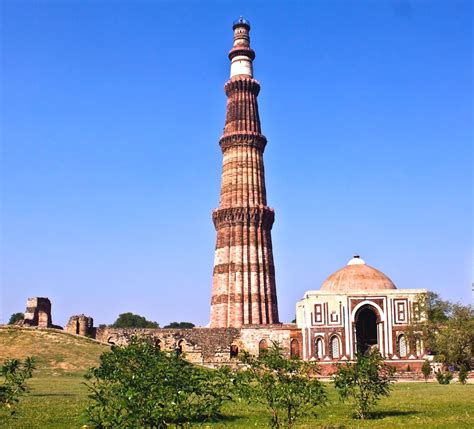
The Qutb Minar complex represents one of the earliest and most impressive examples of Indo-Islamic architecture in India. Construction began in 1193 under Qutb-ud-din Aibak, the first ruler of the Delhi Sultanate, and was later completed by his successor Iltutmish. Standing at an impressive height of 72.5 meters, it remains the tallest brick minaret in the world.
What makes the Qutb Minar truly remarkable is how it blends Islamic architectural traditions with local Hindu craftsmanship. The complex was built using materials from demolished Hindu and Jain temples, evidenced by the Sanskrit inscriptions and Hindu motifs visible on many of the stones. This fusion created a unique architectural style that would influence Indian architecture for centuries to come.
https://www.google.com/maps/search/?api=1&query=Qutb+Minar+Delhi+India
| Feature | Description | Historical Significance |
|---|---|---|
| Height | 72.5 meters (237.8 feet) | Tallest brick minaret in the world |
| Construction Period | 1193-1220 CE | Built during the early Delhi Sultanate |
| Architectural Style | Indo-Islamic | Represents fusion of Islamic and Hindu elements |
| Materials | Red sandstone and marble | Repurposed from 27 Hindu and Jain temples |
| Floors | 5 distinct stories | Each floor has unique design elements |
| Diameter | 14.3m at base, 2.7m at top | Tapers dramatically as it rises |
| Stairs | 379 steps to the top | Currently closed to public ascent |
🏺 The Beginning of Delhi Sultanate Architecture
The Qutb Minar marks the beginning of a new architectural era in the Indian subcontinent. When Qutb-ud-din Aibak established the Delhi Sultanate after defeating the Rajput kingdoms, he wanted to create a monument that would symbolize the arrival of Islamic rule in India. The minaret was initially intended as a tower of victory, but also served practical purposes as a muezzin’s tower for calling the faithful to prayer.
The first story was completed during Aibak’s lifetime, while his successor Iltutmish added three more stories. The fifth and final story was added much later in 1368 by Firoz Shah Tughlaq after the tower was damaged by lightning. Each ruler left their distinct mark on the tower, resulting in a fascinating architectural timeline visible in its very structure.
🧱 Materials and Construction Techniques
The Qutb Minar showcases remarkable medieval construction techniques that have allowed it to withstand centuries of weathering and several earthquakes. The tower is built primarily of red sandstone, with marble used increasingly in the upper stories, creating a beautiful contrast of materials.
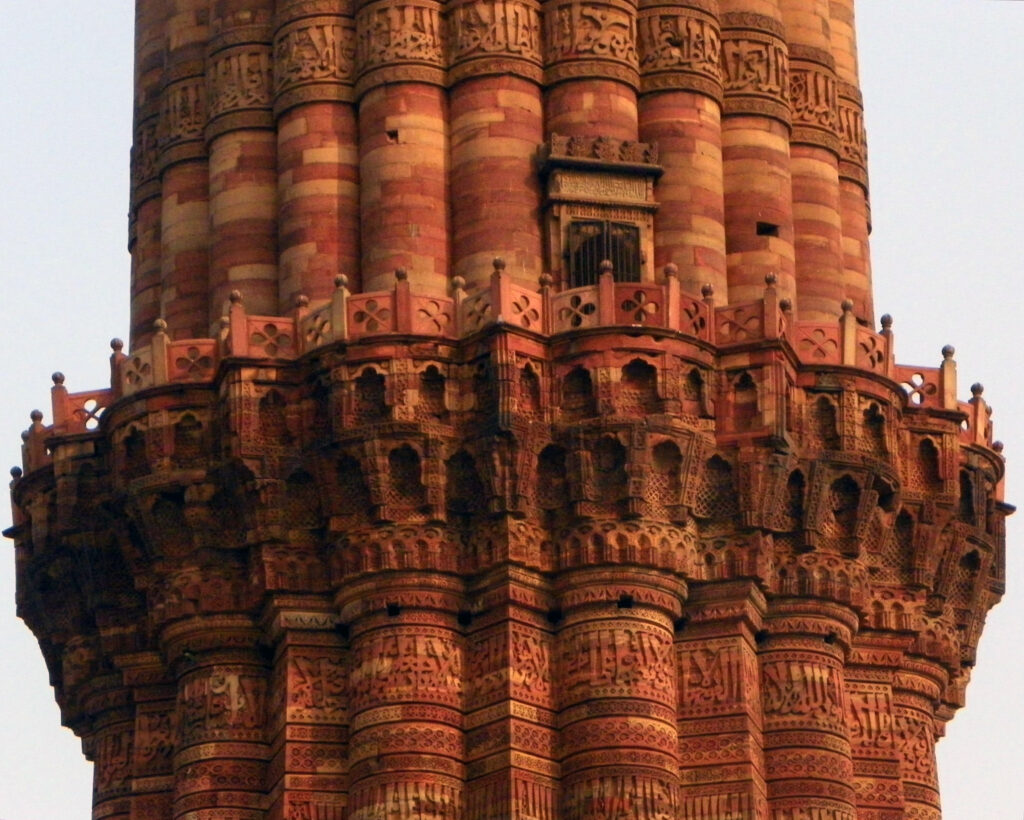
What’s particularly impressive is the engineering knowledge demonstrated in its construction. The tower’s walls are 3 meters thick at the base, gradually becoming thinner toward the top. This, combined with the slightly sloping design and strategically placed balconies, provides structural stability while creating a visually striking silhouette. The intricate carvings that cover its exterior required exceptional craftsmanship, with detailed calligraphy, geometric patterns, and floral motifs adorning every level.
🏯 Key Monuments Within the Qutb Complex
While the Qutb Minar itself draws the most attention, the complex houses several other important historical structures that collectively tell the story of medieval Delhi. Each monument represents a different phase of the Delhi Sultanate and showcases evolving architectural styles and techniques.
The Qutb Complex spans approximately 40 acres and contains numerous structures beyond just the famous minaret. These monuments were built by successive rulers of the Delhi Sultanate, each adding their own architectural contributions to this sacred space. Together, they form one of the most important historical sites in India, providing invaluable insights into the cultural and political transitions of medieval Delhi.
| Monument | Built By | Period | Key Features |
|---|---|---|---|
| Quwwat-ul-Islam Mosque | Qutb-ud-din Aibak | 1193 CE | First mosque built in Delhi after Islamic conquest |
| Iron Pillar | Chandragupta II (Gupta Period) | 402 CE | 7.21m tall rust-resistant iron pillar |
| Alai Darwaza | Alauddin Khilji | 1311 CE | First building in India with a true dome |
| Alai Minar | Alauddin Khilji | Early 14th century | Unfinished minaret meant to be twice Qutb Minar’s size |
| Tomb of Iltutmish | Iltutmish | 1235 CE | Notable for its intricate carvings and inscriptions |
| Madrasa | Various rulers | 13th-14th century | Islamic educational institution ruins |
| Minor Tombs | Various nobles | 13th-15th century | Several smaller tombs throughout the complex |
🕌 Quwwat-ul-Islam Mosque: India’s First Mosque
The Quwwat-ul-Islam Mosque (meaning “Might of Islam”) is the earliest extant mosque in India, built by Qutb-ud-din Aibak in 1193 CE. The mosque’s construction represents a pivotal moment in Indian history, marking the beginning of Islamic influence on the subcontinent’s architecture. What makes this structure particularly fascinating is that it was built using materials from 27 demolished Hindu and Jain temples, with many original carvings and motifs still visible.
The mosque’s courtyard is surrounded by colonnades with repurposed temple pillars, creating a unique aesthetic that blends Hindu craftsmanship with Islamic spatial concepts. The prayer hall features arches constructed in a distinctly Indian style, as the builders were apparently not yet familiar with true arch construction techniques from the Islamic world. This improvisation resulted in a hybrid architectural style that would eventually evolve into the distinctive Indo-Islamic tradition.
🧠 The Iron Pillar: A Metallurgical Marvel
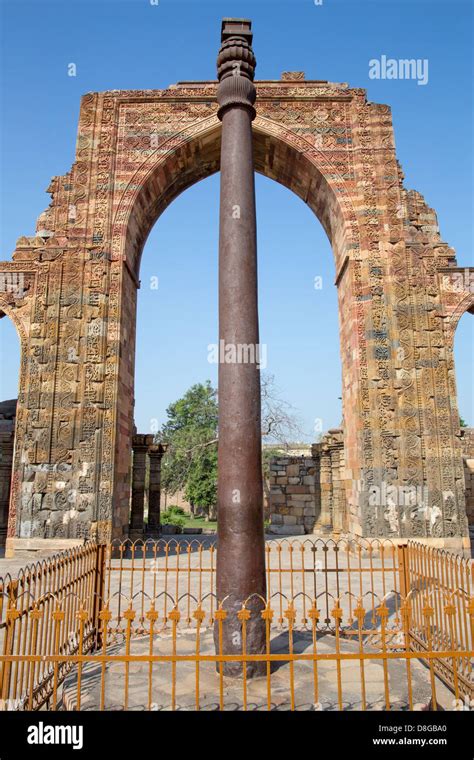
Standing in the courtyard of the Quwwat-ul-Islam Mosque is the famous Iron Pillar, a 7.21-meter tall column that has puzzled scientists for centuries due to its remarkable resistance to corrosion despite being exposed to the elements for over 1,600 years. The pillar predates the Islamic monuments by several centuries, having been erected during the Gupta period around 402 CE.
Originally dedicated to the Hindu deity Vishnu, the pillar bears a Sanskrit inscription in the Brahmi script commemorating a ruler named Chandra, widely believed to be Chandragupta II. Its presence in the mosque complex demonstrates how successive ruling powers incorporated earlier monuments into their own constructions. Metallurgists continue to study the pillar to understand the advanced iron-working techniques that allowed it to resist rust for so many centuries, with theories suggesting a high phosphorus content and formation of a protective passive layer contribute to its longevity.
🏮 Alai Darwaza: Perfection in Stone
The Alai Darwaza, built by Alauddin Khilji in 1311 CE, is often considered the finest architectural example in the Qutb Complex. This ornate gateway is historically significant as the first building in India to employ a true dome and true Islamic arches, marking a significant advancement in construction techniques under the Delhi Sultanate.
Made of red sandstone and intricately decorated with white marble inlays, the Alai Darwaza showcases perfect symmetry and proportions. Its façade features elaborate lattice screens (jalis) that filter sunlight into beautiful patterns, creating a mesmerizing effect inside the structure. The detailed inscriptions, geometric designs, and arabesque patterns demonstrate the high level of craftsmanship achieved during Khilji’s reign and represent a maturation of the Indo-Islamic architectural style that had begun to develop a century earlier.
🏆 Cultural and Historical Importance of Qutb Minar
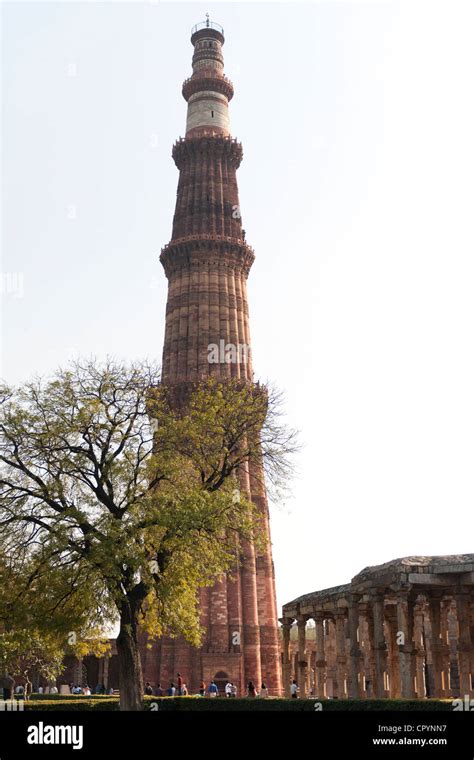
The Qutb Minar complex stands as a testament to India’s layered cultural history and the remarkable synthesis of traditions that occurred during the medieval period. Its recognition as a UNESCO World Heritage Site in 1993 acknowledges its outstanding universal value and importance to human heritage.
Beyond its architectural significance, the Qutb complex represents a crucial period of cultural transition in the Indian subcontinent. It symbolizes the establishment of Islamic rule in northern India and the beginning of a new chapter in the region’s history. The monuments tell the story of cultural exchange, conflict, and eventual synthesis that shaped India’s unique composite culture.
| Cultural Aspect | Significance | Observable Features |
|---|---|---|
| UNESCO Status | World Heritage Site (1993) | Protection and preservation efforts |
| Religious Significance | Symbol of Islamic arrival in India | Islamic calligraphy and architectural elements |
| Artistic Fusion | Blend of Hindu and Islamic traditions | Repurposed temple elements with Islamic designs |
| Inscriptions | Historical records and Quranic verses | Detailed calligraphy in Arabic and Nagari scripts |
| Tourism Impact | One of Delhi’s most visited monuments | Approximately 3.5 million visitors annually |
| Literary References | Featured in numerous historical texts | Mentioned in works of Ibn Battuta and others |
| Cultural Symbol | Represents Delhi’s identity | Featured on numerous promotional materials |
📚 Literary and Historical References
The Qutb Minar has been documented by numerous travelers and historians throughout history, providing valuable insights into how the monument was perceived across different eras. The famous Moroccan traveler Ibn Battuta, who visited Delhi in the 14th century, wrote extensively about the impressive tower and surrounding complex in his travel accounts, describing it as “one of the wonders of the world.”
Medieval court chronicles like the Tarikh-i-Firuz Shahi and Tabaqat-i-Nasiri also contain important references to the construction and modifications of the Qutb Minar. These historical texts help scholars understand the political and religious significance attached to the monument by various rulers of the Delhi Sultanate. In more recent times, the complex has inspired countless poets, writers, and artists, cementing its position as a cultural icon in the Indian imagination.
🎭 Religious and Political Symbolism
The Qutb Minar complex embodies complex religious and political symbolism that evolved over centuries. Initially constructed as a symbol of Muslim conquest and religious triumph, the tower served both as a victory monument and as a muezzin’s tower for calling the faithful to prayer. The deliberate use of materials from demolished Hindu and Jain temples was intended to demonstrate the supremacy of the new political order.
However, what began as a symbol of conquest gradually transformed into a representation of cultural synthesis. The architectural evolution visible in the complex—from the improvised arches of the early mosque to the sophisticated dome of the Alai Darwaza—mirrors the political evolution of the Delhi Sultanate from foreign rulers to an established Indian dynasty with its own distinctive cultural identity. Today, the complex stands as a reminder of India’s ability to absorb and transform diverse cultural influences throughout its long history.
🌏 Qutb Minar in the Modern Context
In contemporary India, the Qutb Minar holds multiple layers of significance. As one of Delhi’s most recognizable landmarks, it features prominently in tourism campaigns and has become synonymous with the capital’s identity. The monument attracts millions of visitors annually, contributing significantly to the local economy and India’s tourism industry.
The site has also become an important educational resource, with school curricula across India including the Qutb Minar as part of lessons on medieval history. Conservation efforts at the complex highlight modern approaches to heritage preservation, with Archaeological Survey of India experts using both traditional techniques and cutting-edge technology to protect the monuments from environmental damage and the effects of urbanization. Regular cultural events and sound-and-light shows at the complex keep the historical narratives alive for new generations, ensuring the Qutb Minar remains relevant in modern India’s cultural consciousness.
🔍 Architectural Details and Features
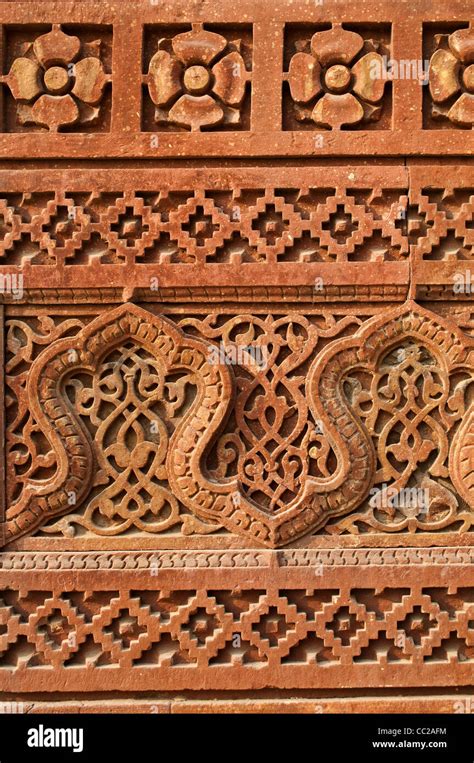
The architectural brilliance of the Qutb Minar lies in its detailed execution and intricate ornamentation. Every inch of the tower and surrounding monuments reveals meticulous craftsmanship that has withstood the test of time. From elaborate calligraphy to geometric patterns, the decorative elements combine functional design with aesthetic beauty.
The Qutb Minar’s design demonstrates remarkable engineering knowledge for its era. Its tapered structure, with a base diameter of 14.3 meters narrowing to just 2.7 meters at the top, creates both stability and visual elegance. The minaret’s innovative design includes projecting balconies supported by elaborate honeycomb-pattern brackets that provide structural reinforcement while adding decorative elements.
| Architectural Feature | Description | Location in Complex |
|---|---|---|
| Calligraphy | Quranic verses and inscriptions | Throughout the minaret exterior |
| Muqarnas | Honeycomb or stalactite vaulting | Supporting the balconies |
| Jali Work | Intricate stone lattice screens | Alai Darwaza windows |
| Arabesque Patterns | Intertwined flowing designs | Upper sections of minaret |
| Bell and Lotus Motifs | Hindu-inspired decorative elements | Repurposed temple columns |
| Corbelled Arches | Early arch technique before true arches | Quwwat-ul-Islam Mosque |
| True Domes | Perfect hemispheric domes | Alai Darwaza |
| Fluting | Alternating angular and rounded fluting | Different stories of the minaret |
📐 Structural Design and Engineering
The Qutb Minar’s impressive height of 72.5 meters required sophisticated engineering knowledge to ensure its stability. The tower’s design incorporates several innovative features that have allowed it to survive numerous earthquakes over the centuries. The tapering cylindrical shape provides natural stability, while the massive base with walls 3 meters thick creates a solid foundation.
The minaret is divided into five distinct stories, separated by projecting balconies that serve both decorative and structural purposes. These balconies reduce wind pressure on the tower and provide visual breaks in its vertical rise. The interior contains a spiral staircase with 379 steps winding to the top, with cleverly designed lighting and ventilation shafts. The construction materials also change progressively, with red sandstone predominantly used in the lower sections and white marble increasing in the upper stories, potentially chosen for its lighter weight as well as aesthetic appeal.
🖼️ Decorative Elements and Inscriptions
The Qutb Minar is renowned for its elaborate ornamentation, with virtually every exterior surface covered in intricate carvings and inscriptions. The decorative schemes vary between stories, creating a visual chronicle of evolving artistic styles during the Delhi Sultanate period. The first three stories feature fluted columns with alternating angular and rounded fluting, while the upper stories display more cylindrical shapes.
Calligraphy plays a prominent role in the tower’s decoration, with Quranic verses and dedications to various sultans carved in both Naskh and Kufic scripts. These inscriptions not only serve decorative purposes but also document the tower’s construction history and the political transitions of the Delhi Sultanate. Geometric patterns, including intricate arabesque designs and star motifs, demonstrate the Islamic artistic tradition’s mastery of abstract ornamentation. Interestingly, some sections also incorporate modified Hindu motifs like lotus flowers and bells, revealing the cultural synthesis that characterized this transitional period in Indian art.
🏗️ Evolution of the Tower Over Time
The Qutb Minar’s construction spanned over 150 years and multiple ruling dynasties, resulting in visible evolutionary changes in its architecture. The first story, built by Qutb-ud-din Aibak, shows relatively simple geometric patterns compared to later additions. Iltutmish’s additions (stories two and three) display more sophisticated decorative techniques and a greater emphasis on calligraphic inscriptions.
The tower has undergone several repairs throughout its history due to earthquake damage. Most notably, the top story was damaged by lightning in 1368 and rebuilt by Firoz Shah Tughlaq in a distinctly different style, using white marble more extensively than the lower sections. Further modifications were made during the British colonial period when major restoration work was undertaken in 1828 by Major Robert Smith, who added a controversial cupola to the top. This European-style addition was later removed and placed in the gardens nearby, where it can still be seen today—a physical reminder of the monument’s complex history of cultural influences and changes.
👨👩👧👦 Visitor Information and Practical Guide
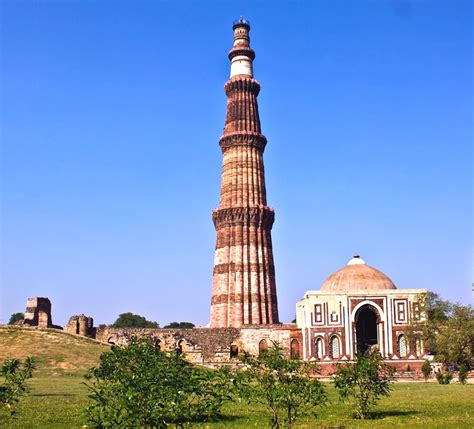
Planning a visit to the Qutb Minar requires some practical knowledge to make the most of your experience. This UNESCO World Heritage Site attracts thousands of visitors daily, and having the right information can help you navigate the complex efficiently and appreciate its historical significance fully.
The Qutb Minar complex is open to visitors throughout the year, though the experience varies with the seasons. While the monuments themselves are always impressive, factors like weather conditions, crowd levels, and lighting can significantly impact your visit. The following information will help you plan a comfortable and enriching experience at this magnificent historical site.
| Visitor Information | Details | Notes |
|---|---|---|
| Opening Hours | 7:00 AM to 5:00 PM | Open all days of the week |
| Entry Fee | ₹35 for Indians, ₹550 for foreigners | Free for children under 15 years |
| Best Time to Visit | October to March | Pleasant weather, ideal lighting for photography |
| Average Visit Duration | 2-3 hours | For a comprehensive exploration |
| Photography | Allowed (no tripods without permission) | Professional filming requires special permission |
| Guided Tours | Available at entrance (₹300-600) | Audio guides also available in multiple languages |
| Accessibility | Limited wheelchair access | Some areas have uneven terrain |
| Nearest Metro Station | Qutub Minar (Yellow Line) | About 500 meters from the entrance |
| Parking | Available (limited) | ₹20 for two-wheelers, ₹60 for cars |
🗓️ Best Time to Visit and Expected Crowds
The ideal time to visit the Qutb Minar is during the cooler months from October to March when Delhi’s weather is pleasant and conducive to exploring outdoor monuments. The winter months offer comfortable temperatures between 15-25°C (59-77°F), making it easier to walk around the expansive complex. The summer months (April to June) can be extremely hot, with temperatures often exceeding 40°C (104°F), making midday visits particularly challenging.
Regarding crowd levels, weekdays are generally less crowded than weekends, and early mornings (7:00-9:00 AM) or late afternoons (3:00-5:00 PM) tend to have fewer visitors. The complex is particularly crowded during Indian holidays and the peak tourist season from December to February. For photography enthusiasts, early morning light creates a golden glow on the red sandstone structures, while late afternoon offers dramatic shadows and warm lighting that highlights the intricate carvings on the monuments.
📷 Photography Tips and Viewpoints
The Qutb Minar offers numerous excellent photography opportunities, though capturing its full height can be challenging due to its scale. For complete views of the minaret, the lawns to the east of the tower provide good vantage points. The best lighting for photography occurs during the “golden hours” shortly after sunrise or before sunset when the warm light brings out the rich red tones of the sandstone.
For detail shots, focus on the intricate carvings and inscriptions on the tower’s exterior and the decorative elements of the Alai Darwaza. The Iron Pillar against the backdrop of the minaret creates an interesting juxtaposition of historical periods. When photographing inside the Quwwat-ul-Islam Mosque, look for interesting frame compositions using the columns and arches. Remember that while basic photography is permitted throughout the complex, the use of tripods or professional equipment requires special permission from the Archaeological Survey of India.
🚶♀️ Recommended Route Through the Complex
To make the most of your visit, a systematic exploration route is recommended. Begin at the eastern entrance and first visit the Quwwat-ul-Islam Mosque courtyard to view the Iron Pillar and gain perspective on the historical sequence of the complex. From there, proceed to examine the Qutb Minar itself, walking around its base to appreciate the different decorative elements on each side.
Next, explore the Alai Darwaza and other structures on the southern side of the complex, including the tomb of Iltutmish and the unfinished Alai Minar. The western section contains additional ruins and minor monuments that help complete the historical narrative. End your visit at the museum located within the complex, which houses artifacts recovered during excavations and provides additional historical context. This route allows for a chronological understanding of the site’s development and ensures you don’t miss any significant structures.
🛍️ Nearby Attractions and Facilities
The area surrounding the Qutb Minar offers several complementary attractions worth visiting. The adjacent Mehrauli Archaeological Park contains over 100 historically significant monuments spanning 1,000 years of Delhi’s history, including the Jamali Kamali Mosque and Tomb, Rajon ki Baoli stepwell, and Balban’s Tomb. These less-visited sites provide a deeper understanding of Delhi’s layered history and can be explored after visiting the main Qutb complex.
For visitor facilities, there are clean restrooms available within the complex, as well as water fountains and a small cafeteria serving basic refreshments. Souvenir shops near the entrance sell books, postcards, and replicas related to the monument. Several good restaurants and cafes can be found in the nearby Mehrauli village and along the Mehrauli-Gurgaon Road, offering options for meals after your visit. The complex also has shaded areas where visitors can rest during hot weather, though it’s advisable to bring water, sun protection, and comfortable walking shoes for exploring the extensive grounds.
🧩 Conservation Efforts and Challenges
Preserving the Qutb Minar and its associated monuments presents significant challenges due to their age, environmental factors, and increasing tourism pressure. The Archaeological Survey of India (ASI) has been implementing various conservation strategies to protect this invaluable heritage site while making it accessible to visitors.
The monuments in the Qutb complex have weathered over eight centuries of Delhi’s extreme climate, pollution, and occasional seismic activity. Modern conservation approaches must balance authentic preservation with structural stability concerns, requiring specialized knowledge of both medieval construction techniques and contemporary conservation science.
| Conservation Aspect | Current Status | Challenges |
|---|---|---|
| Structural Stability | Regular monitoring and maintenance | Settling of foundations, seismic vulnerability |
| Stone Preservation | Chemical treatments for weathered sandstone | Air pollution damage, water seepage |
| Calligraphy Restoration | Specialized artisans working on damaged inscriptions | Balancing authenticity with legibility |
| Landscaping | Controlled vegetation management | Preventing root damage to foundations |
| Tourism Management | Visitor paths and protective barriers | Balancing access with preservation |
| Documentation | 3D scanning and digital archiving | Creating comprehensive conservation records |
| Environmental Controls | Monitoring air quality and vibration | Urban development pressure around site |
| Research Programs | Ongoing archaeological investigations | Funding for long-term scientific studies |
🔧 Recent Restoration Projects
Over the past two decades, the ASI has undertaken several major restoration projects at the Qutb complex. One significant initiative was the comprehensive conservation of the Alai Darwaza completed in 2017, which addressed structural cracks, restored damaged stone elements, and carefully cleaned centuries of accumulated grime without damaging the delicate carvings. This project used traditional materials like lime mortar mixed according to historical specifications to maintain authenticity.
The minaret itself undergoes regular maintenance cycles, with particular attention paid to the water drainage system that prevents moisture accumulation within the structure. In 2005, a major project reinforced the foundation after studies showed slight subsidence in certain sections. Conservation teams have also implemented subtle lighting enhancements that illuminate the monuments at night without causing heat damage to the stone surfaces, showcasing the site while protecting it from environmental stress.
🌳 Environmental Challenges and Solutions
Delhi’s severe air pollution presents perhaps the greatest ongoing threat to the Qutb complex. Acidic pollutants interact with the sandstone and marble, accelerating erosion and obscuring intricate carvings. Conservation teams regularly monitor pollution levels and apply specialized protective treatments to vulnerable surfaces. A buffer zone has been established around the complex to control industrial activity and reduce direct pollution exposure.
Water damage is another significant concern, particularly during Delhi’s monsoon season. The ASI has implemented improved drainage systems throughout the complex and conducts regular pre-monsoon inspections to identify and address potential water infiltration points. Vegetation management is carefully controlled to prevent root systems from destabilizing foundations while maintaining appropriate landscaping that helps filter pollutants and create a pleasant visitor experience. Climate change monitoring programs track how changing weather patterns might impact the monuments, allowing conservators to adapt preservation strategies accordingly.
📋 Balancing Tourism and Preservation
With over 3.5 million visitors annually, managing tourism impact represents a major conservation challenge. The ASI has implemented several measures to balance public access with preservation needs. Designated pathways control visitor movement, keeping foot traffic away from the most vulnerable areas. Barriers prevent direct contact with carved surfaces while allowing visual appreciation, and visitor numbers are monitored to prevent overcrowding during peak periods.
Educational initiatives aim to foster visitor awareness of conservation issues, with informational panels throughout the complex explaining both historical significance and preservation challenges. Digital documentation projects, including detailed 3D scans of the monuments, support conservation planning while creating virtual access options that may help reduce physical visitation pressure in the future. The admission fees collected contribute directly to conservation funding, creating a sustainable model where tourism helps support preservation rather than simply threatening it.
🌟 Legacy and Cultural Impact of Qutb Minar
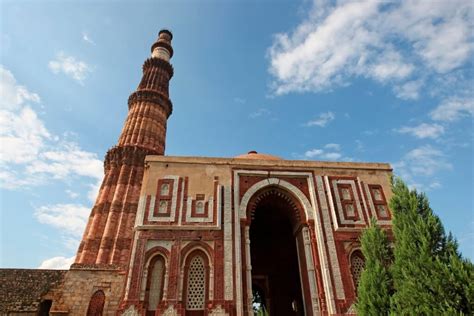
The Qutb Minar’s influence extends far beyond its physical presence in Delhi, shaping architectural trends, cultural narratives, and national identity for centuries. As one of India’s most recognizable monuments, it has become an enduring symbol of the country’s complex historical tapestry and cultural synthesis.
The architectural innovations pioneered at the Qutb complex established patterns that would define Indo-Islamic architecture for centuries. The experimental techniques visible in the early structures evolved into a distinctive style that spread throughout the subcontinent, influencing everything from religious buildings to palaces and tombs. This architectural legacy continues to inspire contemporary designers seeking to reference India’s rich cultural heritage in modern contexts.
| Legacy Aspect | Influence | Examples |
|---|---|---|
| Architectural Influence | Established Indo-Islamic architectural patterns | Visible in monuments across South Asia |
| Cultural Symbolism | Represents cultural synthesis and diversity | Featured in national promotional materials |
| Artistic Inspiration | Motifs and patterns adapted in various art forms | Influences in textiles, paintings, and crafts |
| Tourism Impact | Anchor for Delhi’s heritage tourism | Major contributor to local economy |
| Educational Value | Living classroom for historical understanding | Featured in Indian educational curriculum |
| National Identity | Represents India’s layered cultural heritage | Appears on postage stamps and currency |
| Global Recognition | Enhances India’s cultural profile internationally | UNESCO World Heritage status since 1993 |
🏰 Influence on Later Architecture
The architectural innovations developed at the Qutb complex had a profound influence on subsequent Indo-Islamic buildings throughout South Asia. The successful fusion of Islamic spatial concepts with Hindu decorative techniques established a template that evolved through the Delhi Sultanate, Mughal, and even British colonial periods. The true dome and arch techniques first perfected in the Alai Darwaza became standard features in later monuments, while the decorative strategies combining calligraphy, geometric patterns, and adapted Hindu motifs inspired generations of craftsmen.
Specific elements from the Qutb complex can be traced in later monuments like Humayun’s Tomb and even the Taj Mahal, where the refined proportions and decorative techniques represent the maturation of architectural principles first explored at Qutb. Even in contemporary architecture, references to these historical forms appear in government buildings, cultural institutions, and religious structures across India, demonstrating the enduring influence of this architectural tradition.
🎨 Representation in Art, Literature, and Popular Culture
The Qutb Minar has inspired countless artistic representations throughout history. Medieval miniature paintings often depicted the tower as a symbol of Delhi’s grandeur, while colonial-era British artists produced numerous sketches and paintings of the monument that helped introduce it to Western audiences. In modern times, the distinctive silhouette appears in countless photographs, films, and television programs whenever Delhi’s cultural heritage is represented.
In literature, the Qutb complex features prominently in both historical and contemporary works. From mentions in medieval Persian chronicles to appearances in modern novels like William Dalrymple’s “City of Djinns” and Khushwant Singh’s “Delhi: A Novel,” the monument serves as both setting and symbol in narratives about India’s capital. The tower has also inspired poetry in multiple languages, with poets from Amir Khusrow in the 13th century to contemporary writers finding metaphorical significance in its soaring form and layered history.
🗣️ Cultural Debates and Multiple Narratives
Like many historical monuments in India, the Qutb Minar has become the subject of competing historical narratives and cultural interpretations. Some view it primarily as a symbol of Islamic cultural achievement, while others emphasize the Hindu and Jain elements incorporated into the complex. These different perspectives reflect broader discussions about India’s complex religious and cultural history.
Academic and public discourse about the monument’s origins, purposes, and significance continues to evolve. Archaeological research and historical scholarship provide new insights into the complex’s development, sometimes challenging established narratives. These ongoing interpretations and reinterpretations demonstrate how living monuments continue to participate in cultural conversations, with each generation finding new meaning in ancient structures. Rather than diminishing its importance, these multiple perspectives enrich our understanding of the Qutb Minar’s significance as a monument that embodies India’s diverse heritage.
💭 Conclusion and Final Thoughts
The Qutb Minar and its surrounding monuments stand as remarkable witnesses to a pivotal period in Indian history. From their construction in the early days of Islamic presence on the subcontinent to their status today as a UNESCO World Heritage Site, these structures tell a complex story of cultural encounter, conflict, and eventual synthesis that shaped India’s unique civilization.
What makes the Qutb complex truly special is how it embodies both rupture and continuity in India’s cultural evolution. While the monuments’ creation involved the destruction of earlier Hindu and Jain temples, the resulting architecture incorporated those same traditions into new forms, creating something that was neither purely Islamic nor purely Indian but a distinctive synthesis of both. This pattern of cultural adaptation and integration would become characteristic of India’s historical development.
For modern visitors, the Qutb Minar offers more than just architectural beauty or historical significance. It provides a tangible connection to the past, allowing us to literally touch the same stones that countless generations before us have touched. In an age of rapid change and globalization, such connections to our shared heritage become increasingly valuable, reminding us of the long currents of history that have shaped our present world.
As conservation efforts continue to preserve these monuments for future generations, the Qutb Minar will undoubtedly continue to inspire awe, spark historical curiosity, and symbolize India’s remarkable cultural journey. Whether viewed as a triumph of engineering, a masterpiece of art, or a complex historical document written in stone, the Qutb Minar remains one of humanity’s great achievements and a treasure of world heritage.
🔎 Related Keywords:
UNESCO World Heritage Sites in India, Delhi Historical Monuments, Indo-Islamic Architecture, Delhi Sultanate History, Ancient Iron Pillar Technology
📚 References:
UNESCO World Heritage Centre – Qutb Minar and its Monuments
Вибачте, але я мушу поділитися кулінарною драмою, яка виникла з мене минулого тижня. Дочка захотіла, аби я створила щось неймовірно красиве з нагоди великої події. Ваша героїня, звичайно, розпочала шукати рецепт серед мережі і… о боже!. Втратила цілих нервущих одну з половиною години марних пошуків, стрибаючи з блогу на другий сайт! Деякі ідеї були надто з багатоетапні, декілька – з дорогими компонентами, треті – із масою спонсорських посилань. Але потім раптово я вспомнила про існування сей чудовий портал й просто за 5 хвилин знайшла – прекрасний рецепт! Інструкція став настільки покроковим, що навіть моя дванадцятирічна доця спромоглася своїй мамі підказати. Наприкінці ми разом спекли неймовірний кулінарну феєрію, який був визнаний головним відкриттям святкового столу. Вже сьогодні навіть ті, хто раніше сумнівався мої тепер зацікавлені друзі обсіли мене з розпитуваннями: “Де ви відкрила настільки чудовий рецепт?”
[url=https://olkinblog.icu/]Сайт olkinblog[/url]